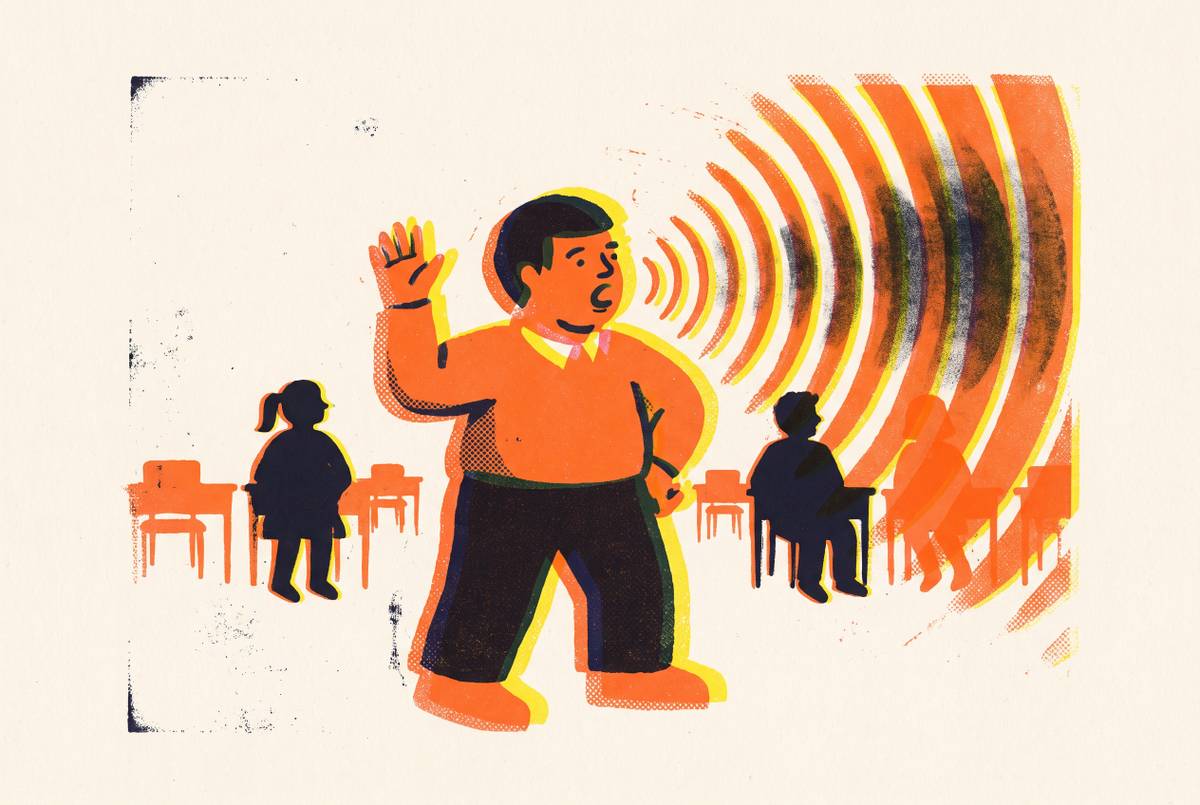
How Speaking Confidence Shapes Salary Negotiation Outcomes
Believing you can negotiate determines whether you ask; what you say determines how much you get.
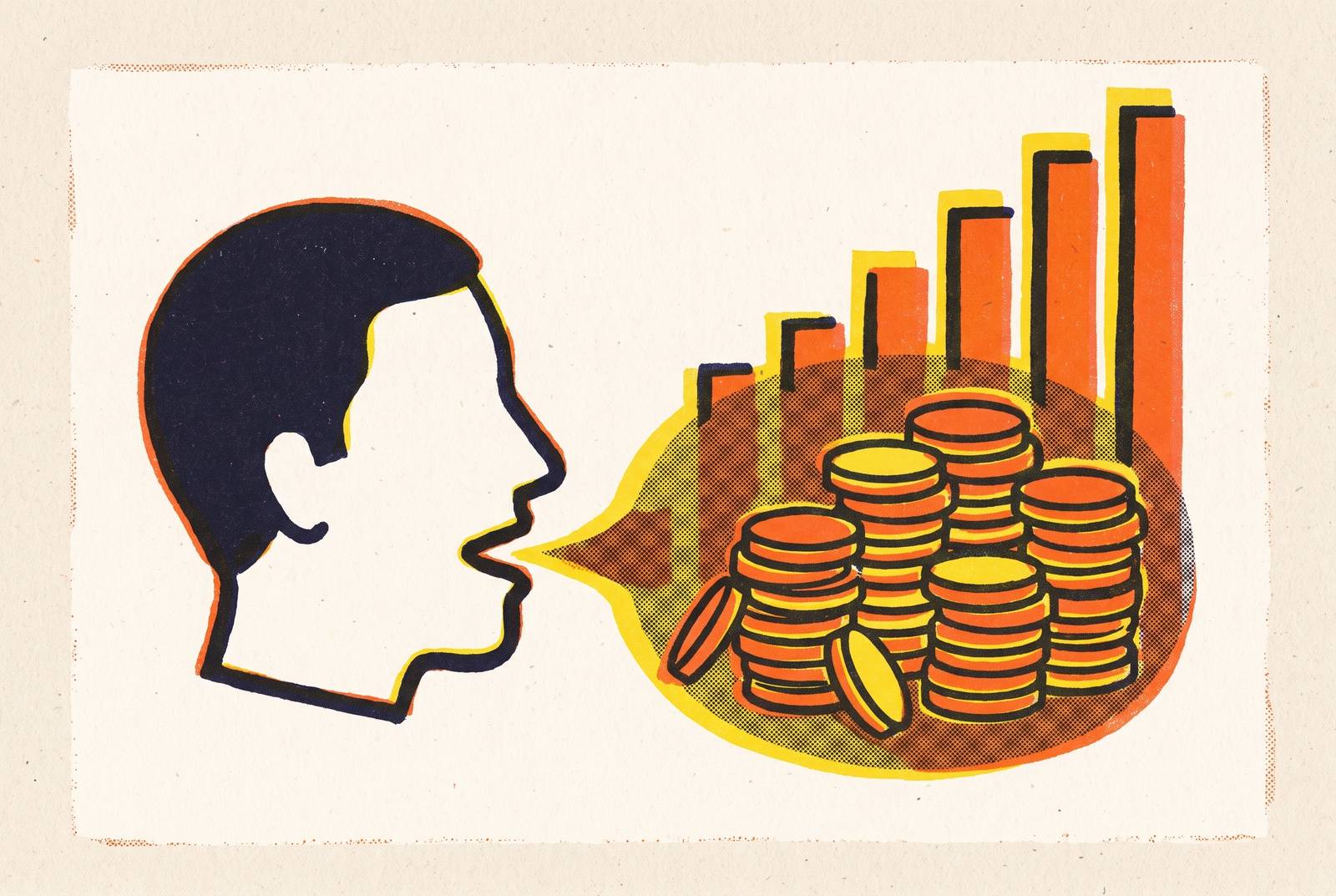
Most professionals leave money on the table not because negotiating fails, but because they never attempt it at all. The barrier is not strategy. It is silence, and the silence has a specific psychological address.
The Resume Genius Salary Negotiation & Expectations Report found that only 45% of professionals negotiated their starting salary. The majority accepted the initial offer without question, without a counter, without a single sentence pushing back on the number in front of them. That is a striking behavioral fact. No negotiation happened because no negotiation was attempted. The gap between what people earn and what they could earn opens in that moment of unspoken agreement, before any strategy could even enter the room.
The question worth sitting with is not "why did their negotiation fail" but "why did it never start." The answer, according to the psychological research, is self-efficacy. Albert Bandura's concept describes a person's belief in their ability to succeed in a specific situation, and in salary negotiations that belief determines whether someone initiates the conversation at all. Low self-efficacy does not produce poor performance. It produces avoidance. The failure is upstream of technique, before words are chosen, before a number is named, before the hiring manager has any chance to respond.
This distinction matters because it reframes the problem entirely. A professional who lacks negotiation tactics can learn them. A professional who lacks the belief that negotiation is something they can do will never seek the tactics in the first place. The act of asking almost always produces a result. The barrier is getting to the ask.
The compounding financial cost of staying quiet
The decision not to speak up in a salary negotiation is not a one-time loss. It sets a lower baseline that compounds across an entire career, and the arithmetic is quietly brutal. An entry-level salary is not just a number for the first year. It is the reference point against which every subsequent raise is calculated, the floor from which every promotion departs, the anchor that drags forward through decades of employment. A modest increase secured at the start of an entry-level role compounds through annual raises and performance bumps into substantially higher lifetime earnings. The early baseline matters disproportionately, precisely because every future number is built on top of it.
Conceding a few thousand dollars in year one is not conceding a few thousand dollars. It is conceding a percentage of every raise that follows, a smaller base for every percentage increase, a quieter case for every promotion. The data on adjacent forms of speaking anxiety suggests it is not. Public speaking anxiety, a close cousin of negotiation silence, has led a large share of workers to reject a promotion or avoid applying for a job altogether. The ripple effects hit wage potential and leadership advancement over an entire career. Fear of speaking does not just reduce salary at a point in time. It permanently narrows the arc of what a person is willing to pursue.
Here is the part that makes the whole thing faintly absurd. The feared downside of negotiating, the scenario that keeps people quiet, is that the offer will be rescinded. The employer will recoil in offense, withdraw the position, and walk away. The research repeatedly debunks this as a myth. Offers are not typically pulled because a candidate asks for more. The statistically normal outcome of a salary negotiation is either a better offer or a polite no, with the original offer still standing. The thing people are afraid of does not happen, while the thing they fail to do costs them money every year for the rest of their working lives. The risk calculation is so inverted it would be funny if it were not so expensive.
Why confidence is the entry toll, not the whole game
Speaking confidence determines whether someone negotiates at all. But the form that confidence takes, grounded, prepared, verbally precise, determines how much they walk away with. This is the distinction the whole argument turns on, and it needs to be stated clearly because the strongest objection to this piece is obvious. If confidence is the variable, someone might say, then we are just telling people to be more confident, which is about as useful as telling a nervous person to relax. Bravado walks into a negotiation with swagger and no plan. Grounded confidence walks in with a specific number, a rationale for that number, and the verbal composure to let silence work in their favor. The first gets a polite no. The second gets a raise.
The research supports this nuance with unusual clarity. Michelle Marks of George Mason University and Crystal Harold of Temple University, in work reported by Harvard Law School's Program on Negotiation, found that independent of the power applicants had at the table, choice of negotiation strategy turned out to be the critical factor in determining the size of the salary increase participants negotiated. Power, leverage, the strength of one's position, these were not the deciding variables. The deciding variable was the strategy chosen, which is to say the verbal behavior deployed. Nerve gets you to the table. Verbal behavior determines what leaves the table with you.
This is also where self-efficacy research loops back in with a useful complication. Individuals with high self-efficacy are more likely to engage in assertive negotiation behaviors. Confidence is both a mental state and a behavioral output, and the two feed each other. But paying the toll is not the destination. It is the price of admission to a conversation where the actual work, which is verbal and specific and learnable, begins.
The verbal mechanics that move a negotiation in your direction
Confident negotiators do not just feel differently. They speak differently, and the specific verbal choices they make are what shift outcomes. What follows are not tips in the sense of tricks. Each technique has a mechanism behind it, a reason it works that sits in the structure of human conversation rather than in the charisma of the person using it.
Silence is the first tool, and the most underrated. The move is simple: state a number, then pause. Do not explain, do not apologize, do not negotiate against yourself, and above all do not fill the quiet with reasons the number might be wrong. The pause communicates confidence. It gives the other party time to respond, which is their job in that moment. The silence is a structural device. It hands the weight of the number back across the table and asks the hiring manager to deal with it.
Tactical empathy is the second mechanism, and it sounds counterintuitive until you see it work. Naming what the other side seems to feel does not concede ground. It opens the conversation about what is genuinely possible. When a hiring manager is constrained by a budget, saying "it sounds like you want to make this work but you are working within limits" does not weaken your ask. It makes the manager feel heard rather than cornered, and a manager who feels heard is more willing to explore the flexibility that actually exists. People do not open up their negotiation room when they feel attacked. They open it when they feel understood.
What connects both of these is that they are verbal behaviors, not personality traits. A person can learn to hold silence. A person can learn to name what the other side is feeling. Neither requires being naturally confident, naturally charismatic, or naturally comfortable at a negotiating table. And strategy is a set of choices about what to say and when to stop talking.
The gender gap in negotiation outcomes and why verbal framing is part of the answer
The negotiation gap between men and women persists even when both parties ask. This is a crucial fact, because it means the problem is not who negotiates but how. And if the problem is how, then verbal craft is a targeted solution, not a generic one. But the gap survives the act of asking itself, which means something happens in the way the ask is framed that systematically affects outcomes.
Hannah Riley Bowles, Senior Lecturer at Harvard Kennedy School, and Linda Babcock, economist emerita at Carnegie Mellon, documented a finding that gives this section its weight. Women can face a social penalty for assertive negotiation framing. The penalty is not about negotiating itself. It is about the manner of the negotiation, the verbal form the ask takes, and the way that form is received. What mitigates the penalty, their research suggests, is relational framing, the kind of tactical empathy described earlier, the explicit acknowledgment of the other party's perspective and constraints. A woman who frames her ask in terms of the mutual interests at stake and the relationship being built navigates the same negotiation differently than one who frames it as a direct demand. The outcome differs accordingly.
This is the clearest evidence anywhere in this piece that the specific words chosen change outcomes. Not just the confidence behind them. Not just the willingness to ask. The words themselves. It is not enough to be willing to negotiate. You have to negotiate in a way that lands, and what lands is different depending on who you are and how your ask is perceived. For women specifically, the verbal framing is not a layer of polish on top of a negotiation. It is a significant part of whether the negotiation succeeds at all. But the table has its own rules about what confident speech is allowed to sound like, and those rules are not neutral. The good news in an otherwise sobering finding is that the rules are learnable. Relational framing is a skill, not an instinct, and like any skill it can be trained.
Why Gen Z negotiates the most and regrets it the most
Gen Z is the most likely generation to negotiate salary and the least satisfied with what they get. The generation is not failing to show up. It is showing up and fumbling the conversation, and the data tells the story with unusual precision.
The Resume Genius 2025 Salary Negotiation and Expectations survey found that Gen Z employees negotiated their starting salary at a higher rate than any other generation, outpacing Millennials, Gen X, and Baby Boomers. This is not a generation that lacks nerve or willingness. The same survey found that a large majority of Gen Z workers regret how they handled their salary talks, and only a small share said they negotiated well and got exactly what they hoped for. That is the lowest satisfaction rate of all generations. They attempt the negotiation more than anyone and feel worse about how it went. The motivation is not the problem. The execution is.
Cangrade's 2025 competency analysis of Gen Z and Millennial candidates provides a structural explanation. Communication scored above average. Research cited in the broader findings shows that an overwhelming majority of Gen Z employees prefer instant messaging as their internal communication channel. None listed email as a preferred channel, and only 5.3% listed face-to-face communication. Verbal spontaneity, the exact muscle a live negotiation demands, is simply not exercised in their daily environment. They are fluent in the asynchronous back-and-forth of instant messaging, where there is time to compose, edit, and delete. A salary negotiation offers none of that.
A growing behavioral response suggests the generation is aware of the gap, at least instinctively. The instinct toward practice is sound. The generation is not content to stay bad at the thing they keep attempting. They are looking for training loops, which is exactly what the next section is about.
How the fear of negotiating is trained away, not reasoned away
The psychological barrier to negotiating is highly plastic. It responds to practice far more quickly than most people expect, which makes the absence of practice the real problem. This is the pivot from diagnosis to mechanism. People do not negotiate more because they read articles about the benefits of negotiating. They negotiate more because the act of negotiating becomes familiar enough that fear stops being the dominant response.
The evidence for how light the intervention can be comes from Harvard Business School. A simple reminder to students that negotiation is normal significantly raised the likelihood of them engaging in salary discussions and led to better outcomes, according to a 2025 report developed for Aurora University. The barrier is psychological and responsive to extremely light intervention. Most of the people reading this are overestimating how much work it would take to change their own behavior around salary conversations.
The mechanism from public speaking research makes the same point through repetition rather than reframing. The more frequently a person practices speaking under pressure, the more familiar the experience becomes. Anxiety decreases not through reassurance but through repeated exposure that builds a new baseline. Each repetition lowers the floor of discomfort slightly, and the lowered floor makes the next repetition slightly easier. That is the entire mechanism. It is not complicated, which is why it is so often neglected in favor of reading more about negotiation strategy.
One caveat from the AI research keeps this from being a one-size-fits-all prescription. The University of Illinois and NYU study found meaningful variation in who benefits from which kind of practice. Someone who practices in a way that does not fit their personality will repeat the wrong motions and wonder why nothing changes.
The compounding logic closes the argument cleanly. A raised baseline salary compounds across decades of raises and promotions. What remains is only the decision to train it.