How Articulate Students Get Advantages in the Classroom
Speaking up in class forces deeper thinking and changes how teachers and peers perceive a student.
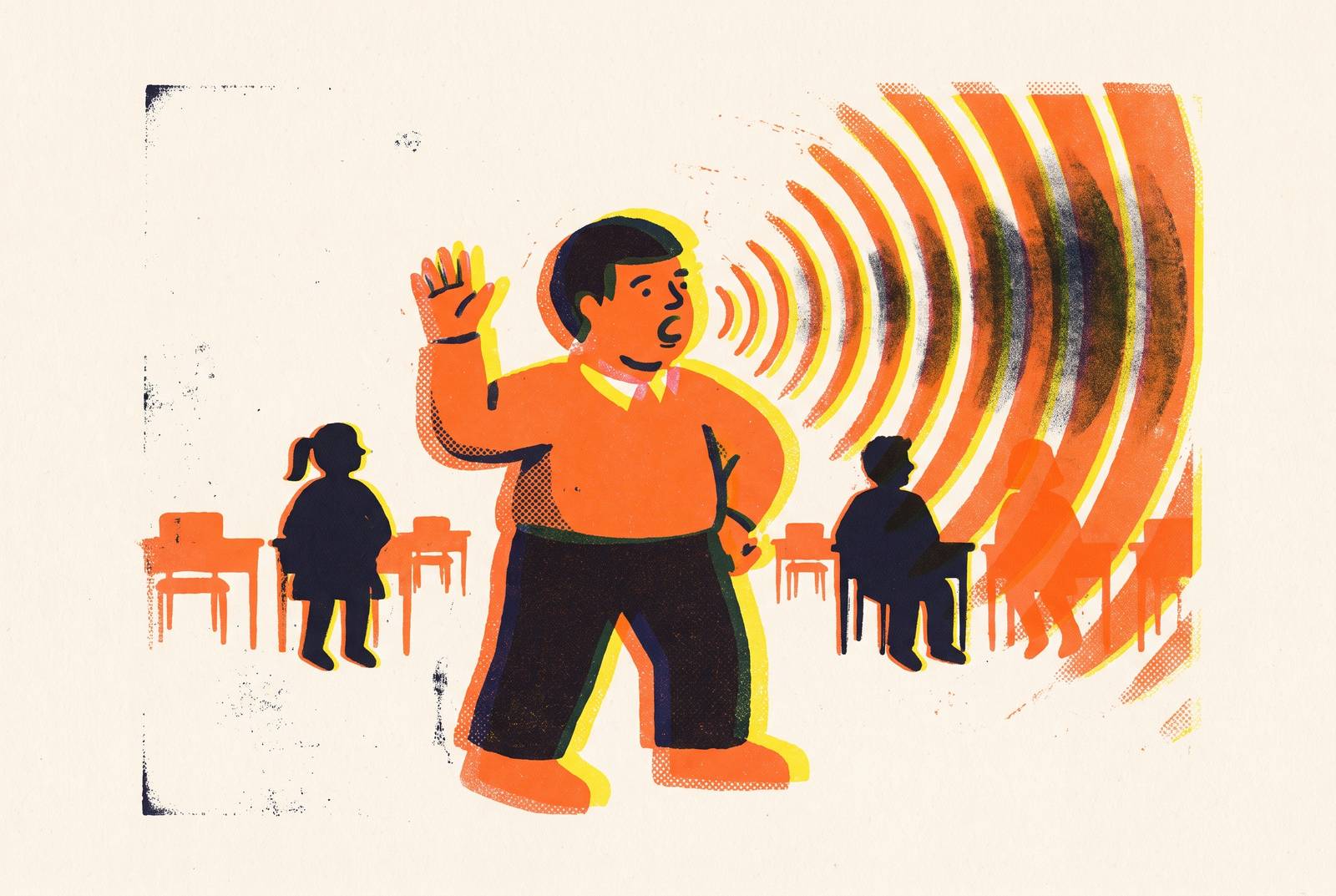
Every classroom has one. The instinct is to call that a gift, some kind of factory setting some students got and others didn't. But that framing does not hold up against what the research actually shows: active participation predicts academic performance more reliably than attendance alone. So the "talker" isn't a fixed identity, it's a behavior, and behaviors can be trained, repeated, and improved on purpose. Once articulation is treated as a skill rather than a personality trait, it becomes the first domino in a chain of consequences that just keeps going, a cascade.
The effect of speaking up on what and how much students learn
Start with the plainest version of the mechanism: participation quality predicts final exam performance, while attendance alone does not. What changes outcomes is the act of putting a half-formed idea into words in front of other people, because that act forces a level of processing that passive listening never demands. Articulation is a compression problem: a student has to take a messy, sprawling thought and squeeze it into a sentence someone else can follow, and the squeezing itself exposes the gaps. You cannot mumble your way through a real explanation. Either the logic holds when spoken aloud or it doesn't, and finding out which one happens in real time is a kind of forced critical thinking that reading and re-reading notes rarely produces.
A secondary effect follows from this too. Hearing classmates articulate their own ideas stretches a student's academic vocabulary and widens their own range of expression, according to USC Rossier. So the benefit isn't purely individual, it is environmental: a room full of students trying to say things clearly raises the linguistic water level for everyone in it. Think-Pair-Share illustrates this well, not as a teaching gimmick but as a structural escalation of demand. A student thinks alone first, low stakes, no audience. Then they test that thought on one partner, which requires enough precision to be understood by a single person. Then they carry it to the full group, where the standard for clarity jumps again. Each stage asks for a sharper version of the same idea, and that's the whole mechanism in miniature.
The perception gap, how teachers and peers read the articulate student differently
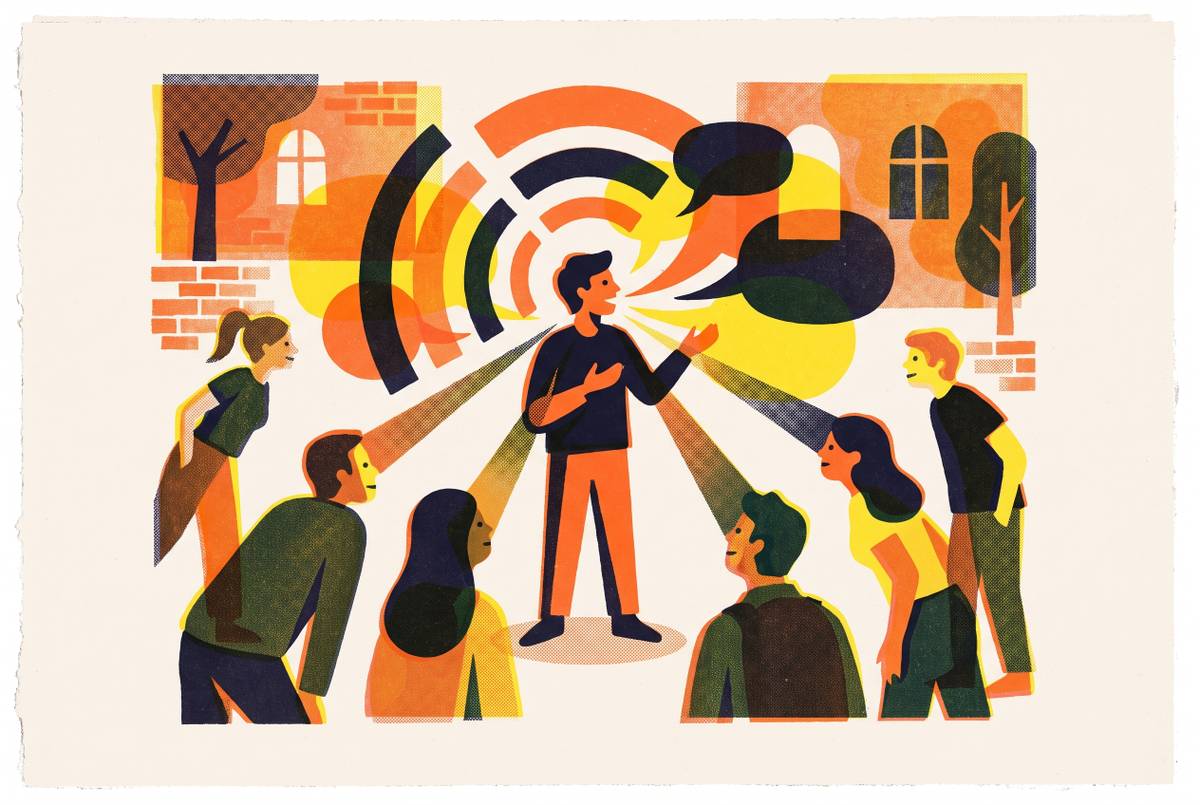
Something else is happening at the same time as the cognitive payoff, and it has nothing to do with what the student learns. It has to do with how the student is seen. Teachers notice the student who speaks clearly. They call on that student more, remember their name faster, and give feedback to them more often, simply because that student is more visible in a room where most people default to silence. Peers notice too, and the noticing works in the student's favor: a classmate who articulates a complicated idea well doesn't just get a nod, they get elevated. Suddenly they're the person others glance at before answering, the de facto authority on whether an idea is any good.
That's a feedback loop, and feedback loops compound. A student perceived as engaged and capable gets more attention from an instructor, and that attention tends to accelerate the growth that earned it. Why does this matter so much, more than it might seem to on paper? Being read as a competent communicator is part of what builds the emotional safety and relational capital behind those gains. The perception gap isn't just flattering, it's structural. It changes what a student is offered and how much room they're given to keep improving. According to DreamClass's synthesis of Hattie's research, social-emotional learning programs improve academic achievement by an average of 11 percentile points, and being perceived as a competent communicator is part of what creates the emotional safety and relational capital that makes those gains possible.
Verbal fluency and why it can be trained
"Fluency" needs a precise definition, because the word gets thrown around loosely. Verbal fluency is the capacity to generate and organize words quickly, and it goes by a long list of aliases: command of language, delivery, elocution, eloquence, enunciation, expression, inflection, intonation, phrasing, pronunciation, even the old-fashioned phrase "gift of gab". All of those names point at the same underlying capacity, and all of that naming confusion is probably why so many people assume fluency is a personality trait rather than a mechanical skill. It looks effortless when someone's good at it, which is exactly the illusion that trips people up. Effortless is what practiced retrieval looks like from the outside. The research points to something closer to a rehearsed motor skill: fluency is a function of retrieval speed, and retrieval speed is built through repetition, not granted at birth.
There's a useful analogy sitting right there in the literacy research. Fluency is one of the five evidence-based pillars of literacy named by the National Reading Panel, sitting alongside phonemic awareness, phonics, vocabulary, and comprehension. Nobody argues that phonics is a personality trait. It's a discrete, teachable, practiceable skill, and fluency sits in that same category: it's foundational rather than a bonus round tacked on for extroverts.
Why confidence and eloquence develop together, not separately
Most students have the causality backwards. The assumption is that you need to feel confident first, and only then does speaking in front of people become possible. Flip that around: confidence gets built by speaking, not the other way around. That inversion sounds almost too convenient, so it's worth checking against actual intervention data rather than taking it on faith.
A 2025 higher-education study found that a structured intervention combining gradual exposure, peer feedback, and guided self-reflection produced a real improvement in self-confidence, alongside a real reduction in public speaking anxiety. One student in that program described the process in a way that's hard to improve on: "We built confidence like stacking bricks. Each little speech was a brick," until eventually, "you have a solid wall of experience behind you." That's a metaphor about masonry, and about repetition. It's a metaphor about masonry, about a pile of small, unglamorous repetitions that eventually holds weight. Part of what made the bricks stack was peer feedback specifically: both affirmation and critique feed self-efficacy and make students more willing to take verbal risks. Criticism, delivered by a peer rather than an authority figure, apparently stings less and sticks more.
The program also used small-group exercises, just ten students at a time, telling stories before working up to anything larger. That scale detail matters: ten people is a manageable audience, small enough that a full-class speech afterward felt less impossible by comparison, which is systematic desensitization dressed up as a classroom activity. A measurement piece drives all of it. Educational technologist Michelle Connolly has noted that recorded presentations let students track their own progress, and that visual evidence of improvement "powerfully motivates children and builds genuine self-assurance". Confidence, in other words, is a byproduct of evidence. It's what happens when a student can actually see the wall of bricks they've built, which is exactly the segue into how that practice needs to be structured day to day.
Daily verbal practice, not occasional big moments, builds the skill
Chicago Public Schools offers one of the clearer natural experiments here, even though it was designed around reading rather than speaking. Tim Shanahan mandated roughly 30 minutes of daily fluency instruction across the district's 437,000 students, balanced against decoding, comprehension, and writing time, and that recipe produced significantly higher reading achievement districtwide. Frequency of exposure and production is what likely drives internalization of spoken articulation, not the occasional big showcase moment that a student crams for and then forgets about until the next one.
But daily practice without measurement is just noise. Rubrics, self-evaluations, and peer feedback give students a structured way to see how they're doing on content organization, delivery, and audience rapport, and vague encouragement doesn't substitute for that kind of structure. "Good job" is not a feedback loop. A 2025 study of peer-assisted public speaking workshops found participants improved in delivery, audience engagement, and critical thinking, and earlier work on structured public speaking training among high school students found measurable gains in self-confidence when it came to delivering structured arguments. The throughline across all of it is the same: improvement needs a signal attached to it, a number, a rubric score, a peer rating, something more specific than a feeling. This is precisely the gap that daily-practice speaking apps are built to close: record a response to a prompt, get a 0-to-100 score back, and repeat the next day. Not a magic fix, just a tight feedback loop applied on a schedule, which is a fairly unglamorous description of something that actually works.
The structural advantages articulate students carry into presentations, discussions, and group work
Picture the specific rooms where this advantage actually gets cashed in: formal presentations, Socratic seminars, group projects with an oral component, in-class debates. In these formats, verbal skill functions as the whole scoreboard rather than a soft plus. A student who has internalized a basic speech structure, a hook, a body built on evidence-backed points, a close that's actually memorable, can deploy that same template across every one of those formats without reinventing it each time. That's the entire appeal of a repeatable structure: it turns a nerve-wracking blank page into a form to fill in.
Delivery matters just as much as structure. A voice that varies in pace, pauses on purpose, and shifts tone at the right moments signals mastery of the material, even when the content is similar to a peer's. Audience awareness compounds this further: knowing how to adjust vocabulary and tone for classmates versus a panel of judges versus a teacher marks a more advanced communicator, and that calibration is itself something a student can practice deliberately rather than hope to intuit.
Group work is where all of this becomes visibly self-reinforcing. Articulate students tend to end up steering group projects because someone has to talk and they're the one willing to. That gets them more practice, more visibility, and more credit on the final product, a loop that starts small and just keeps feeding itself. The 2025 peer-assisted workshop findings back this up directly: participants improved not only in individual delivery but in audience engagement, so the skill radiates outward into how well someone collaborates, not just how well they perform solo.
The value of verbal skill after the classroom
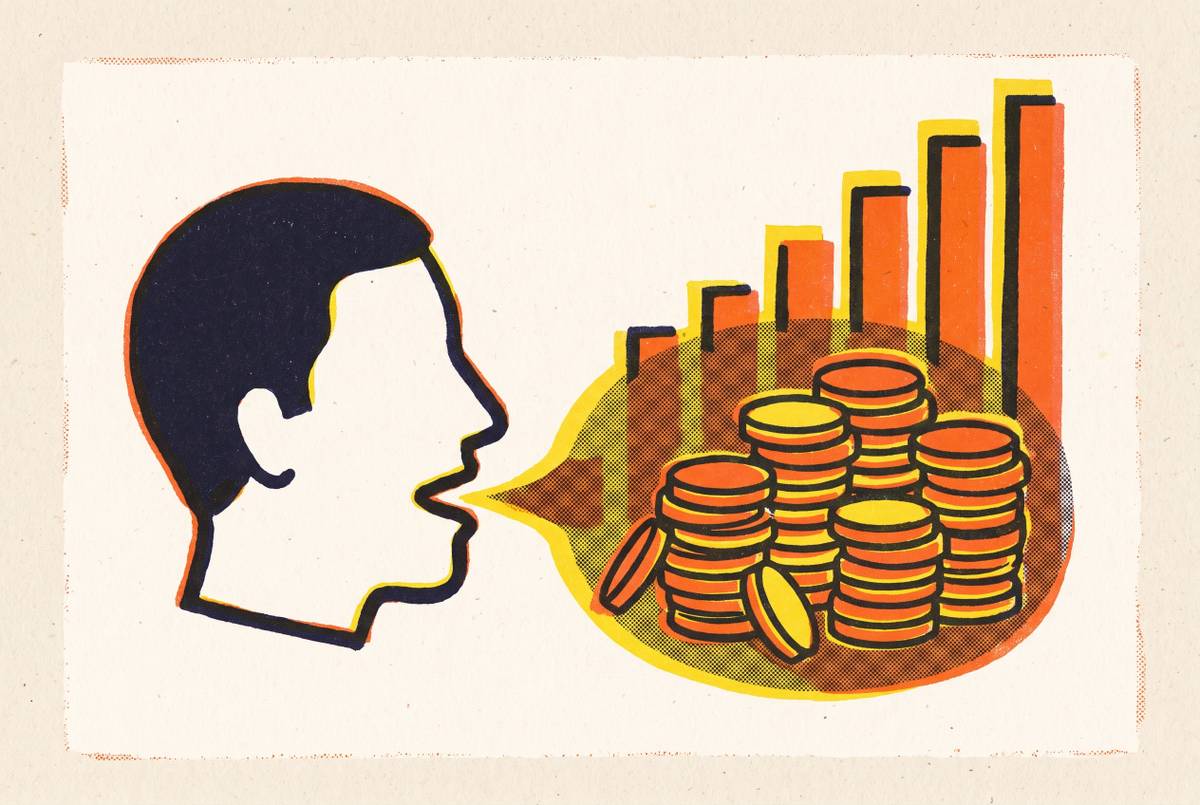
The workplace has quietly changed the terms of this whole conversation. Technical expertise still matters, obviously, but it's stopped being sufficient on its own. What now separates professionals, especially as AI, hybrid work, and cross-functional teams reshape how people collaborate, is how clearly, confidently, and compassionately they communicate. That's not a soft-skills platitude; it's a competitive filter. HBR data found that leaders with strong communication skills are twice as likely to get promoted into executive roles, which is about as blunt a number as this argument is going to get. A 2024 Deloitte survey of executives ranked communication among the only professional skills expected to keep increasing in value every year through 2030, a fairly clear signal for anyone deciding where to spend effort now.
The salary data tracks the same story. Advertising and promotions managers, public relations and fundraising managers, and corporate communications directors all post strong median salaries, with top earners reaching well past those midpoints, according to Bureau of Labor Statistics figures. None of that should read as "study communications, get rich." It should read as evidence that clear, confident expression is a marketable asset with a price attached to it, not an intangible. And past the paycheck, there's a less quantifiable payoff that matters just as much: articulate people get heard in the rooms where decisions actually get made. That's a form of leverage that keeps paying out for decades, long after anyone remembers the specific classroom presentation that built it.
Verbal skill as identity, not just strategy (why Gen Z is redefining what it means to communicate well)
A genuine tension sits underneath this. Gen Z communicates constantly, texts, video, voice notes, social posts, an outpouring of expression at a volume no previous generation matched. But frequency isn't quality, and building fluency (one of the foundational pillars of literacy) takes more than short bursts of exposure. University of Wisconsin-Madison professor Maryellen MacDonald made a version of this case in a January 2026 Washington Post op-ed, arguing that verbal communication is a cognitive and social tool currently under-exercised because the skill is being left on the table rather than because the generation lacks the capacity. That's a generous read, and it's also the more interesting one: the tool is sitting right there, mostly unused.
Something is shifting in how ambitious young people think about this, too. Being articulate is starting to read less like corporate polish, the kind of stiff, forgettable professionalism nobody actually admires, and more like a form of personal identity cultivated on its own terms. Holding a room, making a case, being the person other people remember after the meeting ends: that's a status marker now, not a compliance requirement from a rubric. The training logic borrows straight from athletics, and it is almost embarrassingly simple. Small reps. Frequent feedback. Visible progress, tracked over time, so a person can see the wall of bricks they're building instead of just hoping it's there. A daily prompt, a recorded response, a score, repeat.
None of the students who end up sounding effortless in a seminar room got there by accident, and none of them were simply born lucky. They practiced, they got feedback, they adjusted, and they did it again the next day. It's a repeatable outcome available to any student who practices, gets feedback, and adjusts, not a mysterious gift reserved for a handful of naturally charismatic kids. It's a story with a repeatable structure, one any student could start writing for themselves, starting with the next time they raise a hand.
Sources
- High-Impact Strategies: Enhancing Student Performance - DreamClass
- How to address a wide range of skills and abilities in your classroom | USC Rossier
- (PDF) Enhancing Confidence and Fluency through Project Based Learning for Basic Speaking Course
- From Uncertainty to Competence: A Longitudinal Study of Confidence Development in Occupational Therapy Education