The Social Hierarchy of Who Speaks First in Meetings
Speaking first sets an anchor that shapes what comes next.
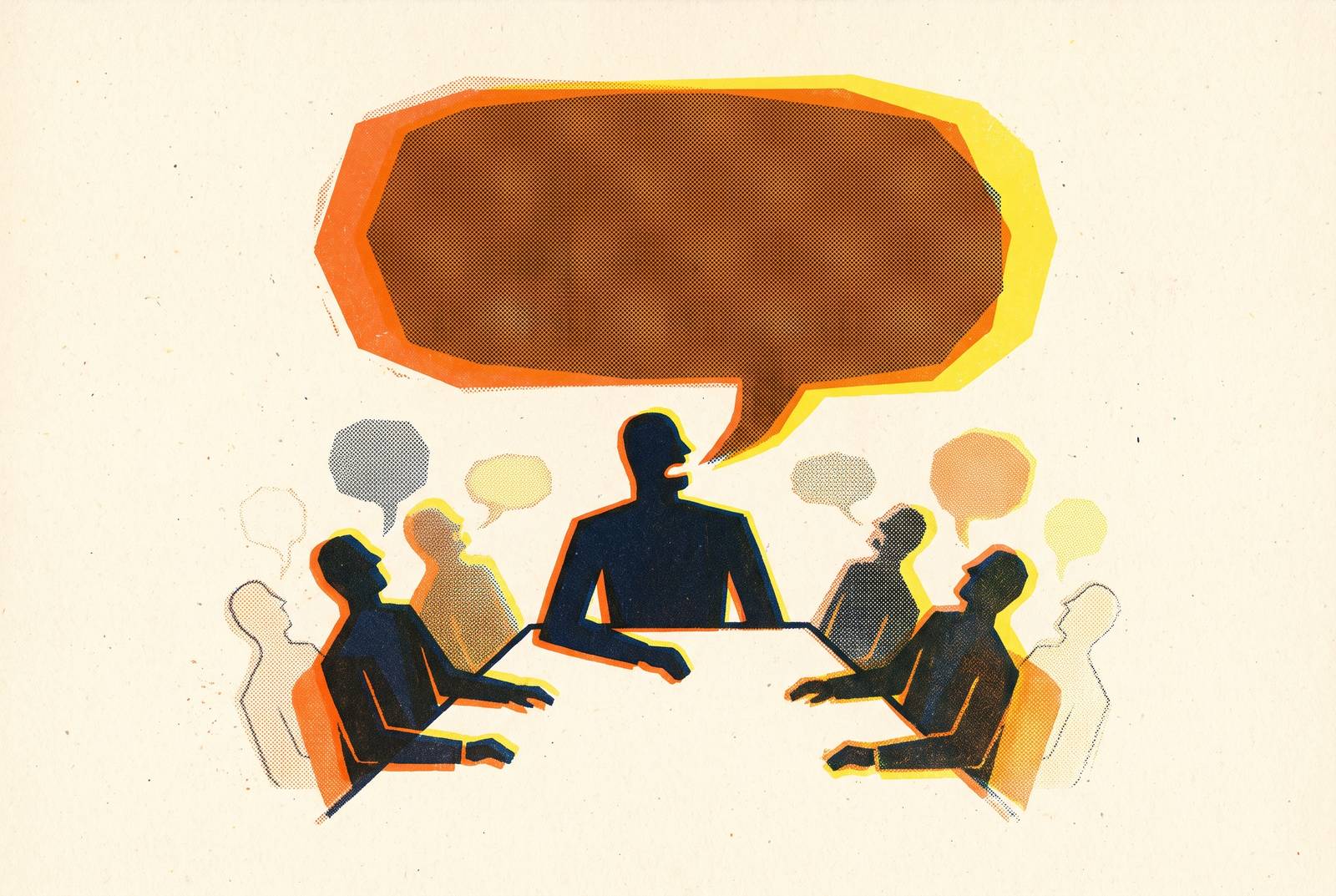
Meeting speaking order is a social hierarchy that gives some ideas a head start before anyone has assessed their value. Understanding how that hierarchy works explains why being right is not always enough to be heard, and why the strongest moves to change your position often happen before the meeting begins.
Why the first voice in a meeting carries structural weight, not just opinion
The first contribution did not merely join a collection of independent opinions. It changed the point around which the discussion developed. That is the anchoring effect, and it explains why speaking order can shape an outcome even when everyone remains free to disagree. The first voice supplies a reference point that later voices must work with or against.
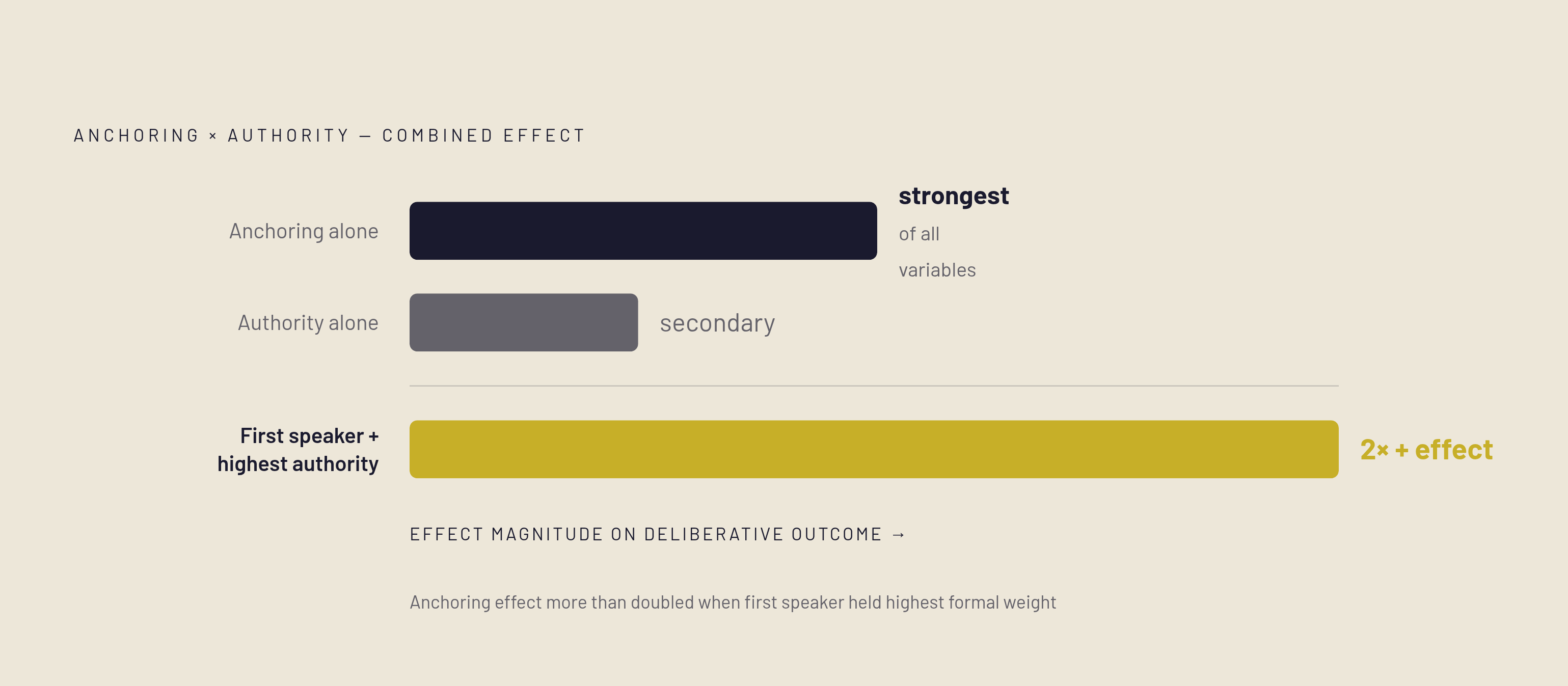
A peer-reviewed modeling study published in Erkenntnis in 2024 puts that mechanism into sharper focus. Among the variables tested, including social influence, opinion popularity and group homogeneity, anchoring had the strongest effect on deliberative outcomes. When the first speaker also held the highest formal weight, the anchoring effect more than doubled. Speaking order and authority reinforced each other beyond what their separate effects would predict. The chair’s opening view can therefore do more than start the conversation.
There is an important limit to this argument. Research on dynamical networks of small group discussion finds that late speakers tend to receive greater weight from others over time. Speaking last is not the same as having no influence, and speaking first does not guarantee victory. But those effects operate on different timescales. A later speaker can accumulate influence while still having to address an anchor set in the opening minutes.
How status hierarchies form before the first word is spoken
Anchoring explains why speaking first matters. Status sorting helps explain who gets to do it. Status Characteristics Theory describes how a group forms a largely unspoken ranking of whose contributions are likely to be worthwhile. That ranking can form without anyone agreeing on it out loud, and people tend to rank one another in much the same order. The meeting has, in effect, begun before the agenda has.
The factors that shape this ranking go well beyond expertise. Across cultures, they include job seniority, physical appearance, including height, attractiveness, being male and being White, and fluency in the meeting’s language. These characteristics help determine perceived standing before the substance of a contribution is available to judge. The ranking is therefore not a simple forecast of who knows most about the problem.
Rucker and Galinsky’s 2025 chapter in the Handbook of Social Influence places this relationship within the broader literature on how hierarchy translates into influence. Formal titles are one route, but they are not the only route. In video meetings without a clear role hierarchy, technical host privileges can become social privileges. Someone who can mute, admit or record has a special place in the meeting even without a senior title. A control panel can begin to act like an organizational chart.
How silence is manufactured, not chosen
Once a ranking is established, it affects more than who gets the first turn. It also changes the cost of taking any turn at all. "Manufactured silence" names this structural effect and shifts responsibility away from the assumption that quiet participants simply lack courage or ideas. A person may have something useful to say and good reason to think the meeting makes it hard to say it. Silence then tells the room as much about its design as about its attendees.
Meeting science identifies three mechanisms behind this pattern. Hierarchy and rigid protocol make silence safer, norms that prize consensus make dissent expensive, and beliefs that speaking up will achieve nothing remove the reason to try. These pressures need not appear as an explicit instruction to stay quiet. Together, they can make participation feel both risky and futile. Asking people to speak does not, on its own, change those conditions.
The burden also extends beyond airtime. When people see a greater power distance between leaders and attendees, they do more emotional labor, including surface acting and deep acting. Employees who fake emotions in meetings come to perceive those meetings as less effective and report higher intention to quit. Meanwhile, divisions between more-tenured and newer members, or between in-groups and out-groups, can create echo chambers that narrow participation further.
The Hylable/Nagoya Institute of Technology study presented at SIGDIAL 2025 connects these pressures to measurable speech patterns. It cites earlier work that found gender and job rank affect hesitation to speak in Japanese organizational culture, and notes similar differences in how people communicate in companies with hierarchies around the world. Recurring differences in participation can reflect the structure of the group.
Gender and the remote/in-person divide as compounding fault lines
That structure does not distribute its penalties evenly. Gender and location also matter in ways a seniority chart cannot show. Research from Brigham Young University and Princeton reports women speaking roughly three-quarters as much as men in mixed-gender meetings, with an average of only two-thirds as much also reported. The findings concern meeting dynamics that make women’s voices harder to hear. Speaking time is an outcome of the setting.
The University of Minnesota study "All of the White People Went First" shows how video conferencing can consolidate control and exacerbate workplace bias. Participants made racial speaking order visible by naming it. Moving a meeting onto screens does not remove the status cues that shape who speaks. Instead, those cues can operate through a format that also assigns control over access and the floor. Digital presence is not the same thing as equal standing.
Rebecca Hinds’s 2026 Read AI report, "Power Dynamics in Meetings", documents a remote/in-person speaking gap that operates independently of rank or gender. Its findings complicate any explanation based solely on who has the most senior job. A participant’s position in the hierarchy also depends on where they join from. These fault lines can compound. One apparently balanced meeting cannot establish that participation is balanced over time.
Why Gen Z enters the meeting room already losing the status game
For younger professionals, several of these disadvantages arrive together. How long people have been there and how much seniority they have feed the status-ranking process before they say a word. If they sound less sure of themselves, that can strengthen the ranking they were first given. Gen Z enters a room whose rules reward traits that many younger people have not yet had time to develop. That is a predictable mismatch between the person and the system.
A large majority of Gen Z report genuine anxiety about speaking in real time, rather than simply a preference for written communication. The "edit button effect" captures the loss involved. Platforms that let people draft and delete before sending offer a safety net that is gone when people speak live. In a meeting, the contribution has to be delivered while its author is also navigating the room’s status signals.
The hierarchy can turn that anxiety into a feedback loop. People who seem less sure of themselves get lower status, and staying quiet seems to bear out that ranking. Because speaking time amounts to getting credit for contributing, the resulting disadvantage reaches beyond the discomfort of a particular meeting. Analysts estimate that speech anxiety can reduce earnings potential and the likelihood of reaching management roles. Treating the problem as something younger employees will simply outgrow misses how the room helps reproduce it.
What technology is doing to the hierarchy — and what it cannot fix
Technology offers ways to interrupt that loop, although it does not abolish the hierarchy. Rebecca Hinds’s 2026 Read AI report associates AI presence in meetings with more equitable gender talk time. Accountability appears to be the mechanism, with behavior shifting when participants know the meeting is being measured. This is a correlation. Even so, it suggests that making the pattern observable can change the conditions under which people speak.
Read AI’s platform makes talk time, speaking pace, sentiment and engagement visible and actionable. That gives leaders data about interactions that would otherwise be difficult to compare. The Hylable speech visualization approach proposes tracking speaking-time disparities by gender and tenure over rolling quarters. Measurement can expose the gap between an open invitation to speak and the actual distribution of speech.
Virginia Tech’s SecondVoice system takes a different approach. Presented for UIST '26, it uses a mixed-reality proxy to say things people hesitate to say in live discussion without naming who they came from. In a preliminary study, half of participants used SecondVoice to raise a point they would not have said aloud, compared with a fraction using anonymous text boards. Points voiced by the proxy also got the group talking back and forth over several turns, which text-board posts did not. The intervention separates the contribution from the status of its author while bringing it onto the spoken floor.
Measurement makes unequal participation harder to overlook, while a proxy can reduce the personal risk of voicing a point. Neither establishes that the underlying status-sorting process has disappeared. The remote/in-person gap is a reminder that technology can create speaking disadvantages as well as relieve them. Tools can redistribute access to the floor, but participants still need ways to navigate the room.
How to disrupt the speaking order in your favor before the meeting starts
Preparation is a chance to affect how your contribution will be received. Research across 30 years of meeting science identifies preparation as the most important input, with participants performing better when they have reviewed the agenda and arrived with something specific to contribute. Start there instead of counting on a burst of confidence once people begin talking.
Preparation also includes making relevant expertise visible. Status Characteristics Theory research identifies markers including quantified expertise in the topic, a relevant credential or data point, past achievement on a related problem, and relevant experience linked to a recognized institution or outcome. Invoke the marker that bears on the decision before or at the opening of the meeting. The purpose is not to recite a résumé, but to give the room a sound reason to weight the contribution. Invisible credentials cannot affect a ranking.
Delivery matters because confident speech is interpreted as competence before the underlying competence has been established. The Leadership IQ study describes effective leaders using the herding effect intentionally by selecting the first speaker for the decision at hand. If you are a Trailblazer addressing an innovation question, establishing your relevant expertise and speaking early is legitimate strategic positioning. The distinction is relevance. The goal is to connect the opening contribution to the problem.
If speaking first is not yet available, consistent, substantive contributions still have a route to influence. The late-speaker effect in dynamical-network research shows why weight can accumulate across sessions. Short daily practice with feedback can also build the verbal fluency you need to say what you have prepared when you are under pressure. This is a trainable athletic skill. The hierarchy gives some voices a head start, but understanding its rules makes it possible to contest the starting positions.
Sources
- Can You Say This for Me? Speaking Up by Proxy in Co-Located Discussion
- The Science of Who Speaks in Team Meetings
- Human Capital Visualization using Speech Amount during Meetings
- Social Hierarchy and Social Influence
- "All of the White People Went First": How Video Conferencing Consolidates Control and Exacerbates Workplace Bias
- Power Dynamics in Meetings
- Dynamical Networks of Influence in Small Group Discussions
- Anchoring as a Structural Bias of Deliberation