Wedding Toast Delivery Mistakes That Ruin an Otherwise Good Speech
Rehearse your wedding toast aloud or delivery will betray your words.
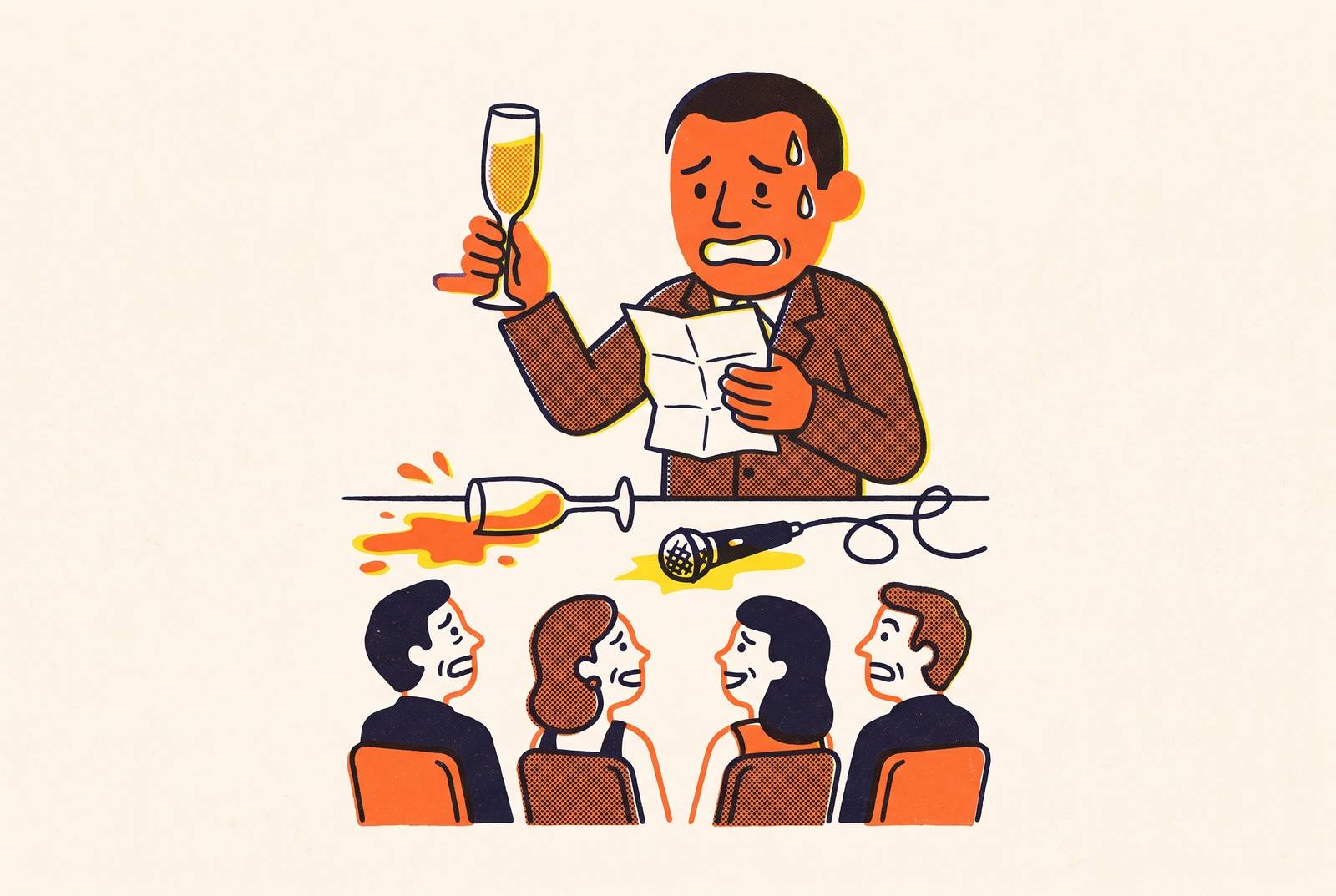
A wedding toast fails when good writing meets delivery that has not been rehearsed aloud. Running long, reading mechanically, freezing and fumbling the ending are usually preparation problems. Train the spoken performance, including its pace, opening and final glass-raise.
Why a well-written wedding toast still fails at the mic
A sentence that works on a laptop still has to survive a mouth, a microphone and an audience. Those are different demands from writing, and they become visible the moment you stand up. A story can seem unfunny because the speaker rushes the turn in it, stops making eye contact or shakes through a line that needs a calm voice. Blaming the material then mistakes the symptom for the cause.
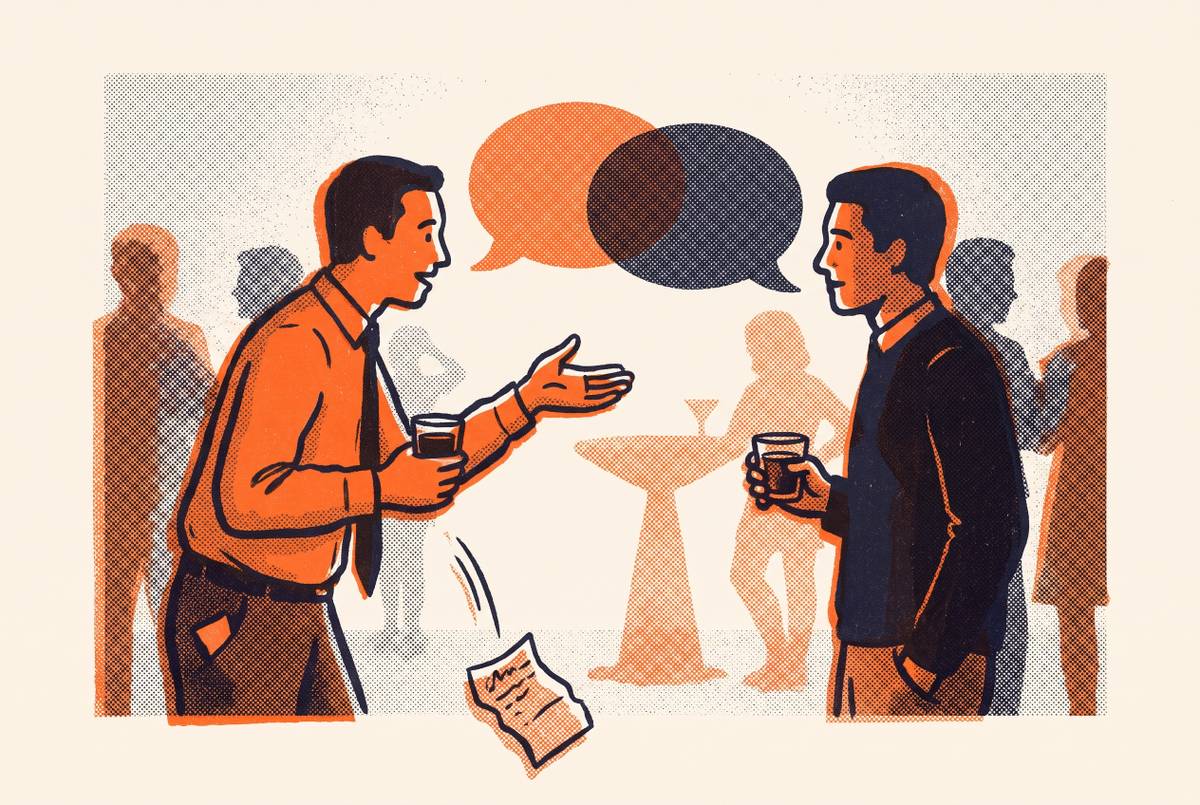
The wedding setting magnifies that difference. A multigenerational room requires more awareness than a conversation among friends, while a live microphone makes delivery harder to overlook. And unlike an awkward remark that fades from memory, a recorded toast enters the permanent family record.
Three root causes behind almost every delivery breakdown
Almost every breakdown traces back to compressed preparation, misconceived rehearsal or mismanaged anxiety. The first begins when writing gets postponed until the morning of the wedding. That leaves the speaker preparing words without enough time to prepare their performance. The draft may be finished, but the delivery is still a first attempt.
The second cause is mistaking silent reading for rehearsal. Reading in your head is editing, because your mouth, breath and pace never enter the test. Familiarity with the page can therefore disguise unfamiliarity with saying it. A sentence may look perfectly manageable while containing a dead spot or tangent that only becomes obvious aloud.
The third cause is treating anxiety as proof that the content is wrong. Under high cortisol, prefrontal activity drops, helping explain why familiar words can suddenly feel inaccessible. Much speaking anxiety is word-finding anxiety, the fear of losing access to what comes next. More rewriting does not directly address that fear, because knowing what a sentence says and retrieving it under pressure are separate tasks.
Running too long, and why cutting is harder than it sounds
Overrunning is the most common wedding toast mistake, and it spends goodwill faster than a good opening earns it. When a speech runs over by five minutes, the room may remember how long it went on more than the love in it. The DJ starts looking nervous while the speaker is still getting to the point. By then, the speech has become a scheduling problem as well as a listening problem.
Length is difficult to judge from inside a story you care about. The backstory feels necessary because it matters to you, while the audience still needs a reason to follow it. That difference makes the clock a more useful editor than your attachment to the material. Confirm the length cap for your role with the couple or planner, then rehearse against it.
If the timed rehearsal goes over, cut. Faster speech preserves the word count at the expense of comprehension, which is a poor bargain for a toast. The aim is a speech that fits.
Reading from a device and what it costs you in the room
Running long often leads to losing contact with the audience when the speaker follows a script. Reading word for word encourages a flat voice and lowered eyes, leaving the room with less warmth even when the words are affectionate. A phone can also make it look as though you are texting during your own speech. It can look as though you barely prepared, even if the speech took hours to write.
The practical middle ground is to write the speech fully, then condense it to a card with six to eight bullets. The card should be a safety net. If you miss a word, nobody in the room has the script to compare it against. There is an important exception, however. If bullet points would leave you completely lost, reading a full script well is better than freezing.
The delivery targets are slower than you think, louder than you think and eye contact. Eyes fixed on a screen work against that combination, while dependence on the next written line makes deliberate pauses harder. Practice without notes until you know the rhythm, using recordings or feedback tools such as Yapp to check your pacing and vocal control. A pause that feels exposed to the speaker can read as confidence to the room.
Opening with an apology and the anxiety spiral it creates
That sense of exposure is strongest at the beginning, which makes an apology tempting. But announcing that you are unprepared or bad at public speaking asks the audience to worry about you before it has a reason to care about the story. The apology puts the nerves on display.
The first thirty seconds are particularly vulnerable because standing up brings an adrenaline surge just when you need ready access to your words. Knowing the opening cold gives you words you can count on to get you through that peak. It also provides a sense of control that can help the rest of the speech settle. Feeling anxious is not, by itself, a reliable assessment of how the delivery looks.
Replace the disclaimer with something concrete. Name yourself, establish your connection to the couple and promise a story, weaving the introduction into something interesting. Rehearse that beginning until it no longer requires a search for words. The goal is not to feel nothing, but to have somewhere clear to go while feeling nervous.
Content risks that delivery cannot save: exes, inside jokes, and identity-based jabs
Even a confident speaker can go wrong with a line because of who pays the price for the joke. A reference to an ex puts that cost on the new spouse. Even a passing setup about a previous relationship brings an unwanted person into the wedding speech and its recording. Cut every mention of either person's past relationships, since a light tone is no guarantee that it will be harmless.
An inside joke creates a different injury, excluding the room. Two friends may laugh while everyone else waits for information they have not been given. If an anecdote needs several minutes of backstory, it has become an explanation with a joke attached. Cut it.
Identity-based roasting hurts the person the joke is aimed at. The distinction is between a specific action, such as Dan spilling nacho cheese on a bride's dress at another wedding, and a label such as calling Dan awkward. Physical appearance, shared insecurities, family dynamics, body type, intelligence and financial situations are off-limits. If the line could serve a bully, rewrite it. A party story that works among relaxed friends also needs more care in a room with older relatives, bosses and conservative guests.
Forgetting the partner and making the new spouse invisible
A speaker who knows one partner deeply can fill the entire toast with that person's history and leave the new spouse almost absent. The omission is understandable in the draft, where familiar memories arrive most easily. At the head table, however, it becomes a visible imbalance.
Give at least thirty seconds directly to the new spouse. Use a specific detail from something you have actually observed between the couple. Ask yourself which moment showed you that this relationship was right for your friend. Answering it gives the partner a place in the speech.
Drinking before the mic and what it does to your delivery
Alcohol offers a socially familiar way to soften nerves, but its trade-off is poorly suited to a toast. Delivery depends on word retrieval, pacing control and the ability to read the room, precisely the resources drinking can weaken. Feeling less inhibited is not the same as becoming more capable. Liquid courage can arrive without its editor.
The practical boundary is one drink, with two as the outer edge before speaking. Save the rest for after the speech. A wedding reception is less forgiving of slurring, rambling or an ill-judged aside than a casual rehearsal dinner.
Harvard's Alison Wood Brooks found that reframing nerves as excitement before a performance improves delivery compared with identifying as nervous or trying to relax. Run the opening thirty seconds in your head and take a full breath. Treat the adrenaline as attention you can direct. It need not be chemically erased before you can speak.
The two-endings problem and the fumbled landing
A strong speech can still lose its shape in the final thirty seconds. The speaker gives the toast two endings when the glasses rise, the moment lands and the speaker adds another thought. That addition cancels the audience's understanding that the toast is complete. What should have been a clean finish becomes another overrun.
The opposite mistake is giving the whole speech and simply stopping, then remembering that a toast needs a toast. Both failures suggest that the speaker rehearsed the material but not the ending, a short sequence that needs its own practice.
End with purpose by raising your glass, asking the room to join you and toasting the couple. Then stop, without retrieving a detail you forgot earlier. A clean landing has to be rehearsed as deliberately as the opening.
Why daily verbal practice is a more reliable fix than last-minute rehearsal
These mistakes point to a distinction between preparing one speech and building the capacity to deliver it. Verbal fluency is trainable. Practicing a little each day gives articulation and word retrieval work to do again and again, rather than leaving all that work to one long session. The wedding then becomes a test of a practiced skill.
Speaking aloud also makes the problem easier to diagnose. A recording shows whether a passage rambles, the pace is too fast or the words are hard to find. Ritchie (2016) found significant improvements in content explanation, timing and speech skills with recorded practice. Tailab & Marsh (2020) noted improved awareness of eye contact and voice quality without provoking anxiety.
Yapp offers one option for that routine, with a single daily prompt, up to three recorded takes and a 0–100 score. It provides immediate feedback people can use in repeated speaking practice. Ambitious students and young professionals can also practice this way before an interview, presentation or self-introduction. The actual toast still needs to be recorded and timed, because general speaking practice cannot show whether that speech fits the time allowed.
The useful comparison is therefore not charisma versus shyness, but repetition versus last-minute familiarity. Daily practice works on retrieval and vocal control, while rehearsing the toast works on its specific sequence. Neither requires the speaker to become a different person. They require the voice, rather than only the eyes, to do the preparation.
A pre-delivery checklist for the week before and the day of
During the week before, confirm the role-specific length cap with the couple or planner and build the draft to fit. Cut the following: every mention of exes, every inside joke that needs more than one sentence of setup, every identity-based jab. Give the new spouse at least thirty seconds of direct address grounded in a specific observation. Write out a clear opening and a clear toast.
Three to five days out, read the draft aloud with a timer. Record it and play it back, listening for pace, volume and whether the ending lands clearly. If it exceeds the cap, remove the weakest material. Keep the pauses.
The day before, run the speech at least twice on your feet, in the space if possible. Prepare index cards or a folded sheet rather than your phone, retaining a full script if you genuinely need it. Test any microphone or slideshow on site. Rehearse the ending as part of the complete delivery.
On the day, keep any drinking before the speech within the one-to-two drink limit and save the rest for afterward. Before standing, run the first thirty seconds in your head, take a full breath and label the nerves as excitement. Deliver the ending you practiced, without an extra thought after it. Ask the room to join you, toast the couple and stop with the glass raised.