Why Some People Always Get Heard in Group Conversations
The specific behaviors that make people heard are learnable, not innate traits.
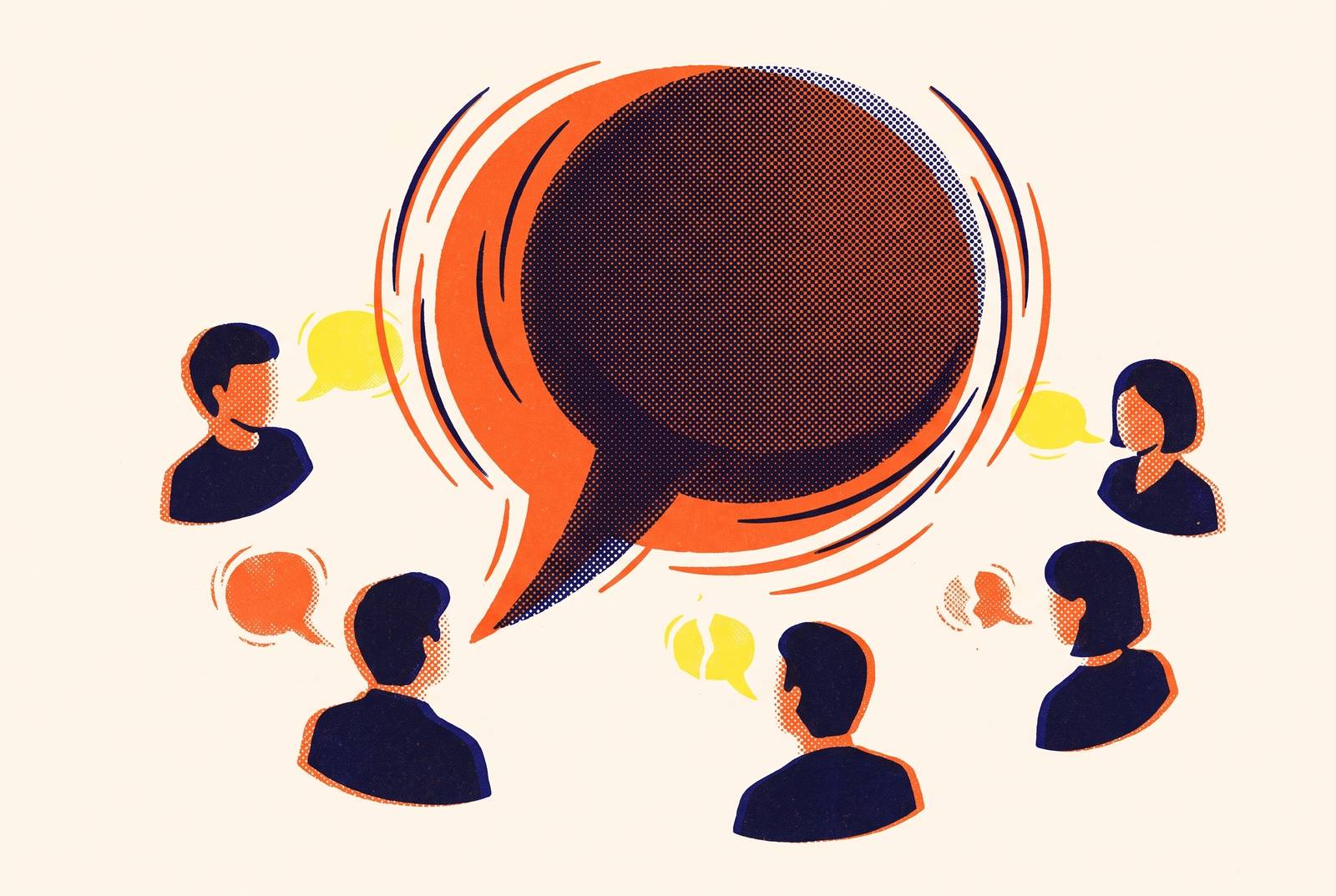
Getting heard in a group conversation is not a matter of charisma or luck. It is a set of specific, learnable behaviors, verbal and nonverbal, that anyone can build with deliberate practice. That reframe matters because most people experience the opposite lesson daily: you had the point, the room moved on, and someone else said the same thing and got the nod. It happens so often that it starts to feel like a law of nature rather than a fixable pattern.
Some of that feeling has a structural basis. Groups larger than roughly six people start limiting who gets to contribute at all, not just how much airtime each person gets. And the timeline is fast: research on dominance modeling shows that a hierarchy of who talks and who doesn't tends to settle within minutes of a group forming. Once that hierarchy sets, it feels permanent, almost architectural, like it was always going to shake out that way.
That illusion deserves poking at. If a pecking order forms in minutes, the people at the top were not necessarily destined for it. They simply moved first, or moved differently, in a window most people don't realize is even open. Assuming the loudest people were born that way is the misconception this piece exists to take apart, because the actual mechanics behind who gets heard turn out to be closer to a set of moves than a fixed trait. And the cost of not learning them is not abstract: ideas that go unheard in a classroom, a meeting, or a friend group simply do not get acted on, regardless of how good they were.
What drives conversational dominance
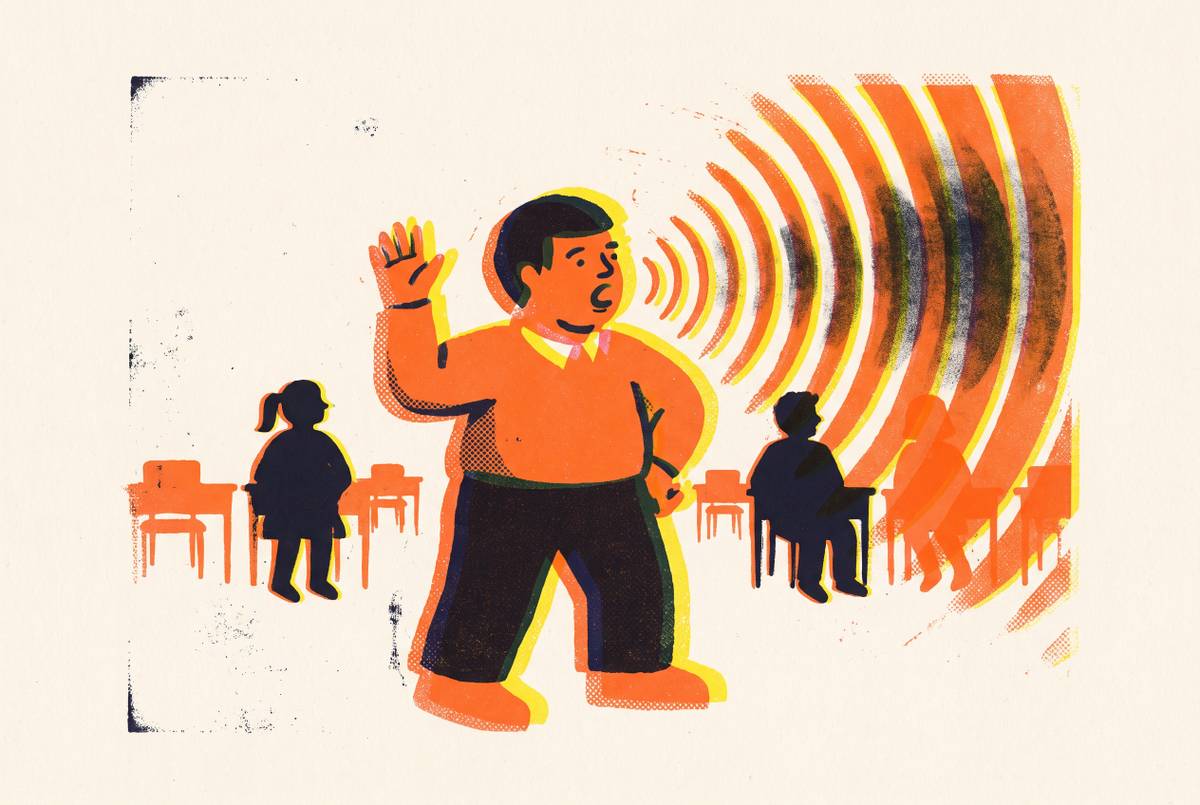
Conversational dominance has a specific, almost clinical definition in linguistics: it describes one speaker's tendency to control other speakers' actions during discourse, meaning who gets to talk, when, and about what. It sounds cold when put that way, but the behavior itself is rarely calculated. It is a complex mix of psychology, personality, and social conditioning, and it often has nothing to do with intentional rudeness.
Extroversion plays an obvious role, since people who draw energy from talking will naturally hold the floor longer in a group setting. But self-perceived status matters just as much, maybe more. Robert N. People who feel they have more knowledge in the room often talk more not to share the knowledge, but to defend the status that comes with having it.
Then there's the nonverbal layer, which turns out to carry more weight than most people assume. The Idiap Research Institute found that the single most dominant person in a group can be correctly identified more than 75% of the time using visual cues alone, no audio required teleprompter.com. An observer can correctly identify who's "in charge" of a conversation in more than 75% of cases using visual cues alone, without hearing a single word spoken teleprompter.com. That means the work of being heard starts before anyone opens their mouth, in posture, movement, and gaze.
But dominance and influence are not synonyms, and this is where things get interesting. Research co-authored by Harvard Business School's Julian Zlatev found that extroverts, despite dominating conversations, are often perceived as less interested in others and even inauthentic. So the loudest voice in the room might be winning the floor and losing the room at the same time. How many meetings has that describes, where one person talked the most and trusted the least?
Silence in Groups: Rarely About Having Nothing to Say
Fear of speaking is close to universal, at least by one measure: roughly 75% of people worldwide report some fear of public speaking teleprompter.com. But that number needs a caveat, because the picture gets messier under closer inspection. The Chapman University Survey of American Fears for 2025 found only 33.7% of Americans describe themselves as afraid or very afraid of public speaking specifically, ranking it 46th out of more than 65 fears measured, up from 29.0% the year before.
That gap between more than 75% and 33.7% is not a contradiction so much as a clue teleprompter.com Chapman University Survey of American Fears. Fear of formal public speaking (the podium, the slide deck, the spotlight) and fear of speaking up in a normal group conversation are different animals, and the second one is likely more common and far less discussed, precisely because nobody labels it a phobia. They just don't contribute.
Among students, the numbers climb sharply: nearly 70% report communication apprehension, and 95% of college students report some form of fear or anxiety tied to speaking voxbooster.com totalcareaba.com. That's most of a lecture hall sitting on things they didn't say. And the silence is not evenly distributed. A study in the Journal of Vocational Behavior found men verbally contribute more and interrupt more often in virtual meetings, while women routinely report discomfort speaking up in group settings. So the barrier isn't just psychological, it's structural, and it lands harder on some people than others.
The cost compounds over a career. Glossophobia, the fear of public speaking, is estimated to cut a person's odds of reaching managerial or leadership roles by roughly 15% speakwiseapp.com. And here's the quietly damning part: only about 8% of people with public speaking anxiety ever seek professional help for it speakwiseapp.com. Most people just absorb it as personality, a permanent feature rather than a fixable habit, and build their whole professional identity around staying quiet in rooms where speaking would have paid off.
The specific behaviors that get people heard
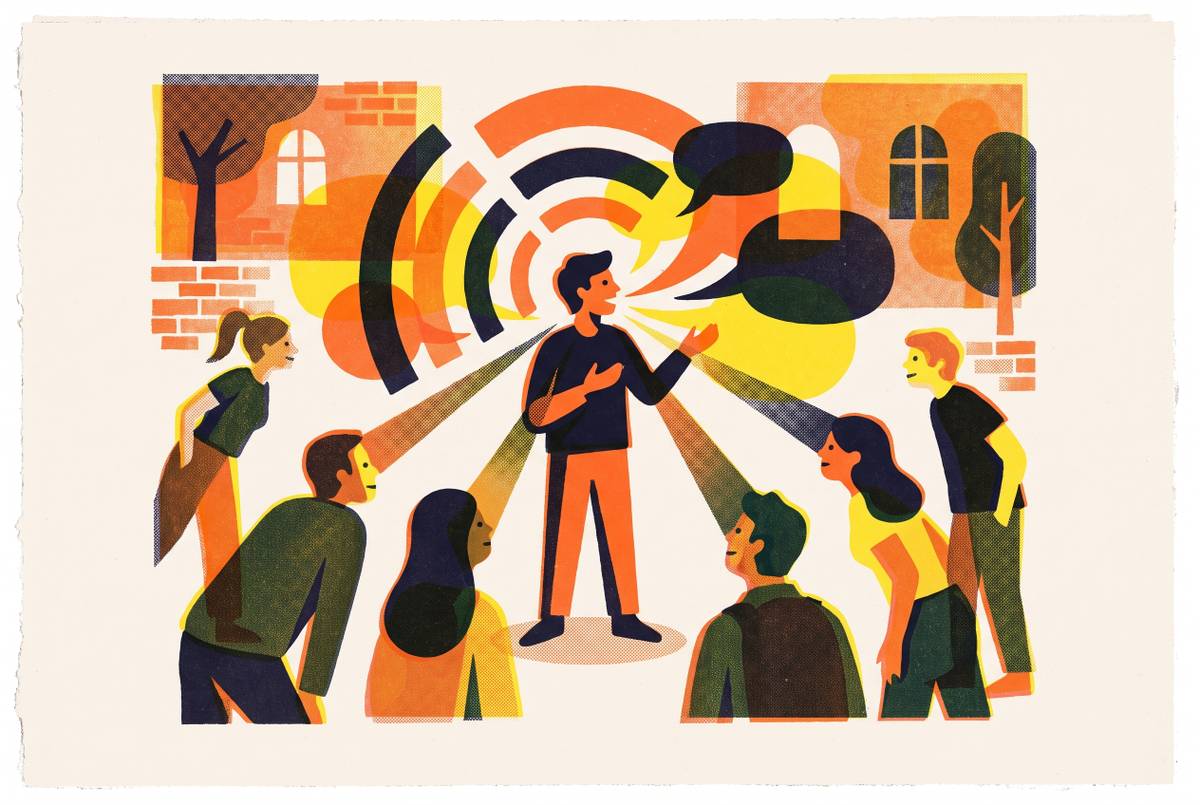
None of this comes down to volume. Getting heard is not about being the loudest voice or the most aggressive interrupter, it's about a specific set of verbal and nonverbal signals that draw attention and read as authoritative, whether or not the person deploying them feels authoritative.
On the nonverbal side, the Idiap Research Institute's work on dominance points to a consistent pattern: more movement, and more of it, active posture, active gesture, and sustained eye contact rather than a gaze that keeps sliding to the floor. Every one of those is a behavior, not a trait, which means every one of them can be practiced in a mirror or in front of a phone camera until it stops feeling like performance.
Verbally, timing does more work than most people credit. Finding the natural pause in a conversation and stepping into it beats trying to talk over someone mid-sentence, which tends to read as aggression rather than confidence. That's thematic anchoring, and it is the opposite of hijacking a conversation. It's joining one.
Concision affects how well an idea is remembered. The idea in someone's head (what linguists would call the deep structure) is what gets remembered; the surface structure, the actual number of words used to say it, is what gets people tuned out if it runs too long. Related to this is something called the given-new contract: take what the last person said, and add something new on top of it. That single move signals two things simultaneously, that the listening happened and that there's something worth contributing, which is a more efficient trust-builder than almost anything else available in real time.
And when a group is simply too large to break into, structurally locking out quieter members, the fix is not to fight for the whole room. Breaking into a smaller subset conversation is a legitimate skill, not a consolation prize or a social failure. Every one of these behaviors, entry timing, thematic anchoring, concision, the given-new move, subgroup formation, is a pattern that can be isolated and drilled. None of it requires being a different kind of person.
Storytelling, structure, and a remembered voice
Getting the floor solves only half the problem. University of Chicago psychologist Alexander Todorov's research (conducted while he was still at Princeton) found that audiences form snap judgments about a speaker's trustworthiness and competence within seconds, so the shape of a delivery is doing work before the content has even landed.
Story is the shape that works best. An analysis of 500 TED Talks found that 65% of the ones that went viral included a personal story, which is a fairly blunt data point in favor of narrative over pure argument mlpp.pressbooks.pub. But not every story works. The ones that land tend to have tension positioned early, one clear obstacle or dilemma rather than three vague ones. Sensory detail and a small moment of vulnerability do double duty, building credibility and human connection in the same breath, and then the story needs a resolution that actually ties back to the point being made rather than just trailing off as an anecdote for its own sake.
The underlying shape is one audiences are already conditioned to expect, moving from a beginning that sets who, where, and what's at stake, through a middle that introduces the complication, to an end that delivers the insight. That structure is not limited to keynote stages. Pitches, meetings where a decision needs to happen, job interviews, all of these run on the same principles of clarity, structure, and presence. Which raises a fair question: if the mechanics are identical, why do so many people prepare a story for the stage and wing it in the meeting where the actual decision gets made?
This isn't a soft skill dressed up as craft, either. A paper in Communication Teacher by Nancy Donoval of East Tennessee State University documents storytelling now being taught formally in public speaking courses, structured across two class sessions with a culminating oral assignment. That's a curriculum, not a talent show.
How verbal fluency develops as a trainable brain skill
Fluency has an actual address in the brain rather than a mysterious origin story. The regions most implicated, the left inferior frontal gyrus, the dorsolateral prefrontal cortex, handle lexical retrieval, executive control, and the inhibition of competing thoughts that would otherwise derail a sentence halfway through.
A 2025 meta-analysis published in ScienceDirect found that non-invasive brain stimulation produced small-to-moderate improvements in verbal fluency, with the strongest effects appearing when the stimulation targeted the left DLPFC, left motor cortex, and right inferior frontal gyrus. That's a fairly direct signal that these are trainable systems, not fixed endowments. If external stimulation to those regions improves output, the reasonable inference is that internally generated stimulation, meaning regular speaking practice and structured verbal tasks, works through a similar channel, even if the mechanism is less precisely mapped outside a lab.
Eloquence is the ability to express thoughts clearly, precisely, and with some sense of craft in spoken form. That is a skill definition, not a personality descriptor, and it sounds very different from "some people just have it."" Interestingly, the strategies people use to build fluency split along gendered lines in the research: women tend toward back-channeling and supportive verbal strategies, while men tend to rely more on sheer speech volume. Neither approach is inherently superior, and both are learned habits rather than biological defaults, which undercuts any claim that fluency belongs to one type of person more than another.
The payoff compounds. Higher verbal fluency means smoother entry into conversations already in progress, sharper handling of social nuance, and, over time, better professional and personal relationships, because the skill does not sit still once it improves. It keeps paying interest.
What a daily practice habit looks like
Short and frequent beats long and occasional, at least when it comes to lowering anxiety and sharpening clarity. A daily routine of roughly 10 to 15 minutes produces steadier gains in articulation, and a steadier drop in anxiety, than a single marathon practice session once a week.
What does that actually look like day to day? A single prompt, answered out loud, forces word retrieval under a small amount of pressure, which is the actual cognitive muscle being worked. Recording the response adds a layer that's easy to skip but hard to replace, because it creates distance between what a person thinks they sound like and what they actually sound like. Structured feedback (specific, not vague encouragement) closes the loop, since knowing precisely what improved and what didn't is what makes the next attempt better. Rotating through different prompt types, storytelling one day, persuasion the next, rapid response after that, builds range rather than just comfort in a single format.
The research backs the habit, not just the intuition behind it. A 2025 ERIC-indexed study of a structured intervention program for university students found a real improvement in self-confidence around public speaking, alongside a matching drop in anxiety. And a broader meta-analysis covering 26 studies and 2,253 participants found that psychological interventions produced a large reduction in public speaking anxiety symptoms overall, a fairly strong rebuttal to the idea that this is all just feel-good self-help talk. It's closer to physical therapy than motivational speaking.
Treating verbal practice like athletic training, with daily reps, a measurable score, something to beat tomorrow that wasn't beaten today, changes the emotional register of the whole exercise. Dread turns into something closer to drive, mostly because progress becomes visible rather than assumed. And the cumulative effect is belief. It's belief: every time speaking up produces a real result, the internal threshold for doing it again drops a little further, and the cycle starts to feed itself.
What separates people who stay heard from people who get heard once: the underlying difference.
Getting heard one time is a tactic. Staying heard, across meetings, across years, across every group that forms and reforms around a person, is a reputation, and reputations get built on repeated pattern rather than a single strong performance. That repetition arises from the same voice efficacy loop described in the section above: each confirmed result lowers the threshold for the next attempt, and the cycle accelerates on its own.
The people who stay heard tend to share a short list of habits rather than a personality type. They listen closely enough that the given-new contract happens naturally instead of as a rehearsed trick. They signal presence nonverbally before a word leaves their mouth. They keep a story, or at least the working pieces of one, ready to deploy or assemble on the spot. And, maybe counterintuitively, they know when to stay quiet, which is precisely what makes their words carry more weight when they finally do speak.
Environment plays a role too, though it's not the whole story. A 2025 study published through PubMed Central found that inclusive group climates raise voice behavior overall, with voice efficacy acting as the actual mechanism behind that increase. In other words, the room a person is in matters, but the belief that speaking will produce something is the lever an individual actually controls, regardless of how welcoming that room happens to be.
Personality still matters some, just less than it looks like it should. Extroversion offers a head start, not a lifetime advantage, and Julian Zlatev's work on perceived inauthenticity is the reminder worth keeping close: volume without substance loses trust over time. Which leaves a fairly plain conclusion. Being heard consistently is not about being the loudest person at the table or the least afraid. It's about showing up practiced, present, and purposeful often enough that the room simply expects it, the same way it expects the lights to come on when someone flips the switch.