Self-Talk Patterns That High-Performing Speakers Use Before They Speak
Elite speakers use specific self-talk cues to regulate attention, emotion, and performance.
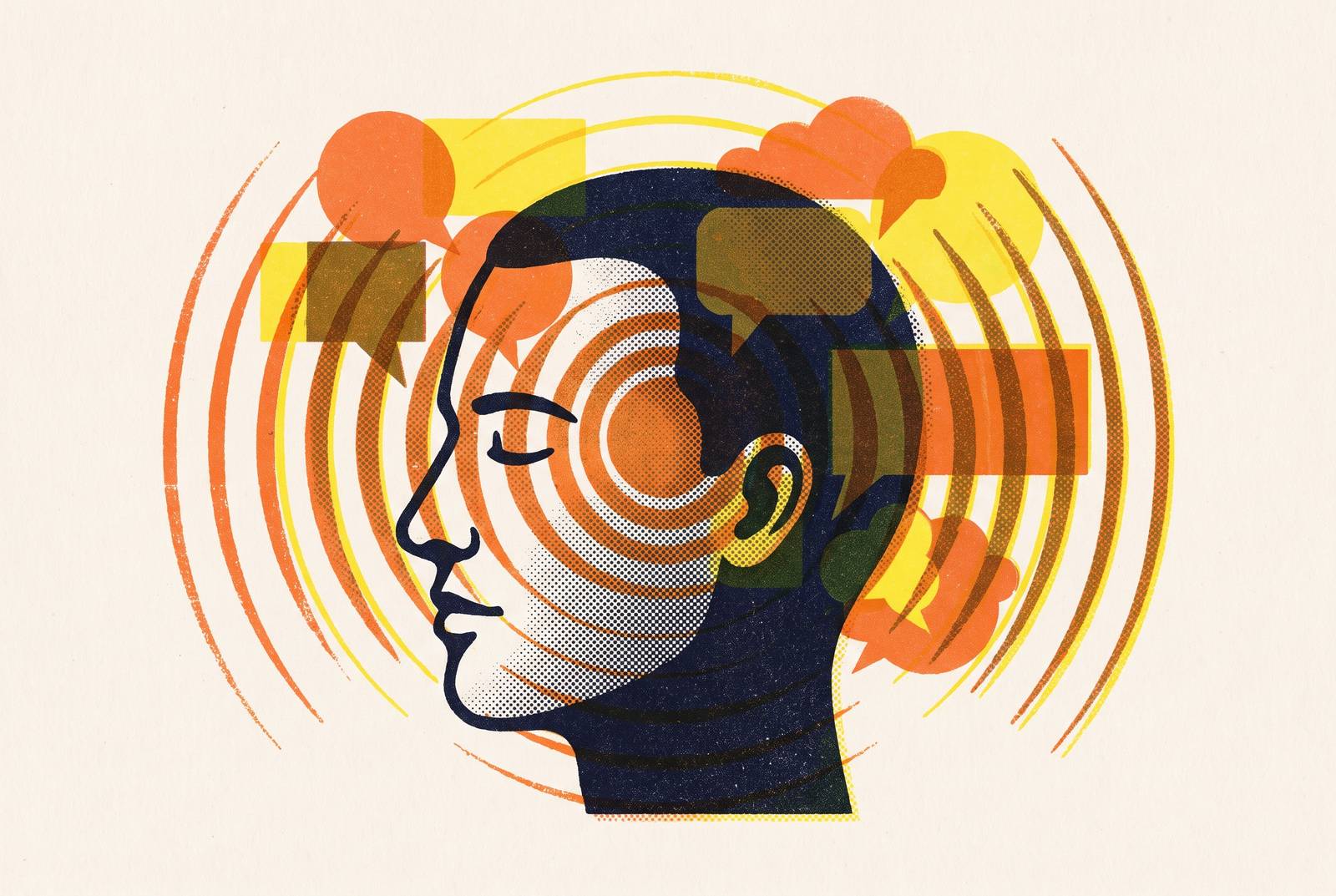
The self-talk patterns that high-performing speakers use before they speak do more than cheer them on. They regulate attention, emotion, and execution through specific, learnable cues.
Why the pre-speech moment is the highest-leverage window for self-talk
A speaker stands backstage, heart rate up, waiting to walk out. The opening is prepared, but attention has moved from the first sentence to what the audience might think. Nothing in the speech has changed. Yet the words running through the speaker’s head can shape how that preparation survives contact with pressure.
University of Michigan psychologist Ethan Kross’s work treats self-talk as a regulation system. It influences how people manage thoughts, feelings, and behavior under social stress. In the short time before a performance, that system has a job to do right away. This is different from the ambient inner monologue that accompanies daily life, where benefits outside preparatory situations are small.
Three levers explain the distinction, namely attention, state, and expectation. Attention can organize the mind around comparison, such as “they’re better than me,” or execution, such as “stay smooth through the first 200. State is how the body responds, because thinking of a situation as too much to handle can tighten muscles and speed up breathing, while words focused on the task help the body stay coordinated. Expectation concerns the performance being anticipated. Trevor Moawad captures that last function in the phrase “Words are tools, and they both predict and perpetuate performance.”
What the strongest available evidence actually confirms about self-talk and performance
Structured self-talk training produces performance benefits, but its effects depend on how and when it is used. An eight-week training study found significantly greater improvements in competitive performance, self-efficacy, volitional skills, and state self-confidence, with greater reductions in somatic anxiety, primarily compared with a control group. The longer training only partially outperformed one week. That qualification prevents a useful finding from becoming a promise that more practice improves every measure equally.
The mechanism is also more distributed than a mental confidence button. Inner speech uses a network that brings together language production, self-referential processing, and emotion regulation. Different words can help manage different parts of that response. Simply talking to yourself is not the intervention in any useful sense, because the content and timing help determine what the talk does.
What does this settle for a speaker? Deliberate self-talk is trainable, and practice deserves to be focused where the evidence is strongest, around preparation and performance. It does not establish that a more upbeat daily monologue will transform speaking ability. Knowing that limit helps speakers work on cues they can use instead of trying to get rid of every negative thought.
The two functional types of self-talk, and when to reach for each
Instructional self-talk guides what to do, while motivational self-talk helps build energy and confidence. A speaker who needs to slow down may reach for encouragement when the useful intervention is a mechanical cue.
Instructional phrases such as “smooth tempo,” “eyes up,” and “one breath” keep attention on controllable behavior during execution. Motivational phrases such as “stay aggressive” and “let’s go” are more useful when effort or confidence is the constraint. They cannot substitute for preparation. Using them to cover a technical weakness creates confidence with nothing dependable beneath it.
A third pattern, evaluative self-talk, often takes over when people are under stress. “That was terrible” turns an event into a verdict, while “I always screw this up” makes the verdict personal and global. The useful contrast is an inner critic versus an inner coach. The critic judges through feelings, while the coach points to what the speaker can control and do next.
Motivational language can help regulate energy during warm-up, but instructional language should take over as execution begins. A pep talk may get a speaker to the stage, but it cannot deliver the opening breath.
Why switching from "I" to your own name changes what your brain does next
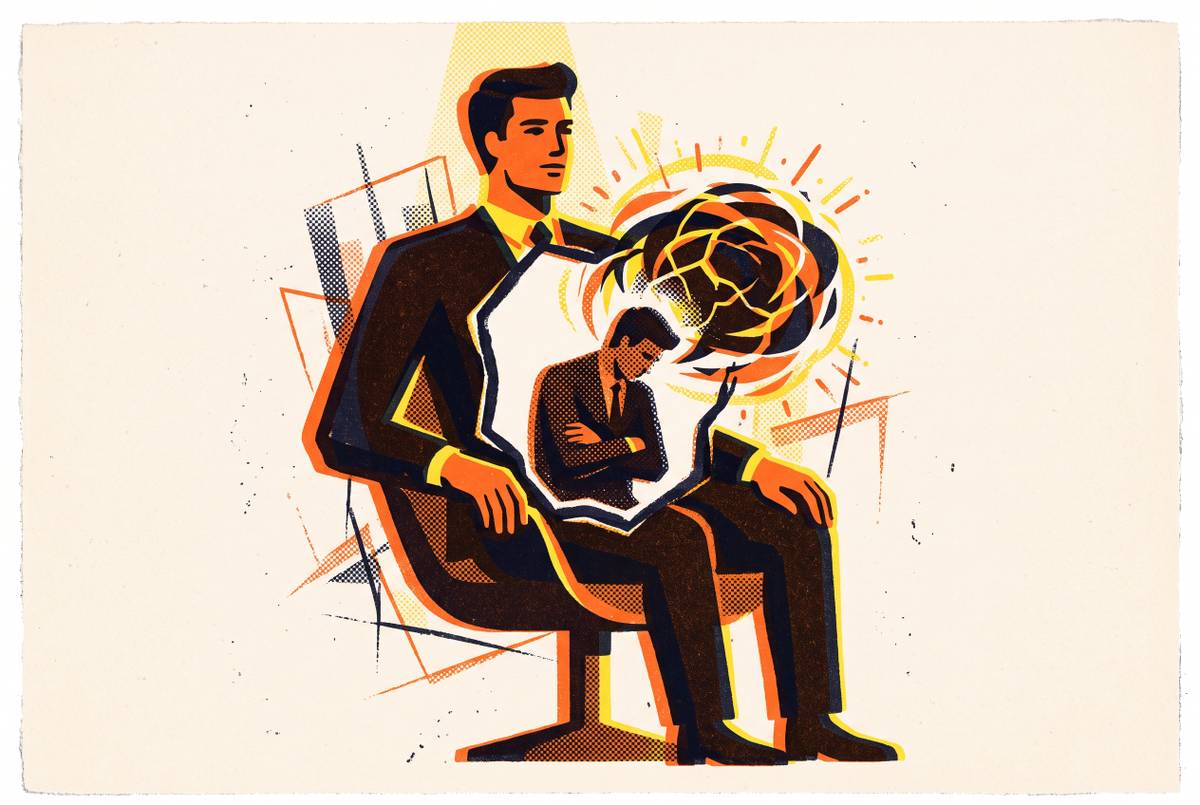
“Oh my god, how am I going to do this? I can't prepare a speech in five minutes!” presents the problem from inside the alarm. “Ethan, you can do this. You've given a ton of speeches before.” creates a little distance from it. The second version sounds like coaching someone whose situation can be looked at from the outside.
Kross’s 2014 research in the Journal of Personality and Social Psychology tested that shift. Participants who addressed themselves by name or used “you” reported less distress and performed better in stressful social tasks than those using “I” and “me.” In the public-speaking experiment, objective judges rated the distanced group more favorably. Those participants also said they felt less shame and spent less time brooding afterward.
Moser, Dougherty, Mattson et al.’s 2017 study in Scientific Reports, co-authored by Kross, examined the neural mechanism using fMRI and EEG. Third-person self-talk lowered activity in the medial prefrontal cortex/anterior cingulate cortex, which is linked to self-referential emotional processing, while activity in cognitive control regions did not increase. This may give people distance without making them work harder to control their response. That helps explain why a small change in address could alter how both encouragement and instruction land.
The behavioral evidence is stronger than the neural explanation. The original core experiments found statistically significant, moderate-to-large effects on performance, but most of the people who took part were young undergraduates tested in a lab. Transfer to high-stakes professional settings and different cultural contexts remains unsettled. The imaging work also involved one lab’s small studies, with the fMRI result awaiting independent replication and the ERP evidence receiving partial replication.
What elite performers actually say to themselves before they compete
Coco Gauff’s language at 3-3 in her 2024 Australian Open match illustrates motivational self-talk aimed at emotional state. Nervous, she told herself, “I feel good, I look good, so just have fun.” Similarly, Novak Djokovic’s bathroom self-talk during his 2014 Wimbledon match included “Believe in yourself,” showing that regulation can happen mid-performance.
Michael Phelps’s phrases linked performance to accumulated preparation. “I've trained for this moment” and “No matter what little thing goes wrong, I have already prepared for it thousands of times in my mind” directed attention toward evidence. Their function was grounding. They gave him a reason to trust his execution when doubts came up.
Naomi Osaka’s approach gives evaluation a more disciplined role. She acknowledges a negative thought, then examines its purpose, whether it originated with her or an outside source, and the evidence supporting it. Examining whether the thought deserves authority separates emotional reaction from strategic mental management.
Beyoncé’s “Sasha Fierce” persona provides a more theatrical version of psychological distance. She described the contrast directly, saying, “I'm not like her in real life at all. I'm not flirtatious and super-confident and fearless like her.” The persona served as a scaffold for confidence she had not yet internalized. It illustrates the logic of distanced self-talk given a character, rather than proving that an alter ego and a laboratory pronoun shift are identical interventions.
How to structure the cues themselves — what makes a pre-speech self-talk phrase actually work
Replace “I have to win this” with a compact sequence describing what to do. A runner might use “tall posture, relaxed shoulders, fast turnover,” while a speaker’s equivalent might be “open stance, slow breath, first line.”
Keep the individual cue short enough to retrieve under pressure. A single word or short phrase has a better chance of surviving the moment than a carefully composed paragraph. Direction is equally important. You do not go to a restaurant and order what you do not want, so the stage is a poor place to begin that habit.
For the same reason, name the action you want to take. “Don’t rush the opening” still places rushing at the center of attention, whereas a cue about a slow breath points toward execution. The aim is to give an instruction with a clear destination.
When uncertainty takes over, replace “what if?” with “what do I know as facts?” Focus on facts that can help the present performance, setting aside “I didn't prepare as much as I wanted” when it offers no useful next action. Then pair the cue with a breath, a step, or a consistent pre-speech movement. That physical anchor supports reliability under stress and, with repetition, can become a conditioned trigger. These are craft rules to learn.
Why Gen Z and young professionals need this most — and are least likely to have it
Public speaking, asking for help, and job interviews are among the ways of communicating that Gen Z and young professionals find hardest. All require people to speak before they can edit what someone else hears. That is a different constraint from composing a message. Comfort with communication tools does not automatically build tolerance for conversational imperfection.
A digital-first environment gives people extensive practice in carefully crafted, editable communication. Real-time speech removes both editing and delay, which can feel overwhelming when that tolerance has not developed. Someone can be articulate in writing and still lack a practiced way to regulate the moment before speaking.
Poor verbal communication can cost money, opportunities, and professional visibility, while managers identify it as a major gap in younger employees. That makes pre-speech regulation a competitive skill. It helps address the point where having something worthwhile to say and being able to say it under pressure diverge.
There is an encouraging irony in the preparation many young speakers already do before phone calls. Rehearsing a conversation is an intuitive form of pre-speech self-talk. The gap is in the craft. Deliberate practice gives that rehearsal a clearer purpose by shifting from what others might think to cues for what the speaker can control and do next.
How daily repetition turns self-talk from a technique into a reliable performance trigger
A phrase first attempted before a major speech has not yet become a dependable trigger. Repetition is what connects the words, the physical anchor, and the act of speaking. The training evidence shows that benefits can build over time, though longer training does not do better on every measure. That is a stronger basis for practice than treating self-talk as an emergency switch.
In practice, this means short speaking sessions each day with feedback right away, rather than relying only on longer preparation once in a while. The cue then becomes part of execution. Useful self-talk can build confidence, doing better can strengthen it, and growing self-efficacy can help people stay motivated. The cycle gives confidence evidence to stand on.
Beyoncé’s eventual retirement of the persona illustrates the endpoint. Beyoncé killed her. The scaffold had served its purpose, and the confidence no longer required a separate character. For a speaker, that is the promise of treating verbal performance as an athletic skill built through daily practice, until a deliberate instruction becomes a familiar response to pressure.