The Science of Charismatic Pacing and Strategic Silence
Brain activity shifts during pauses, making silence a trainable tool for more persuasive speaking.
What the brain does when a speaker pauses
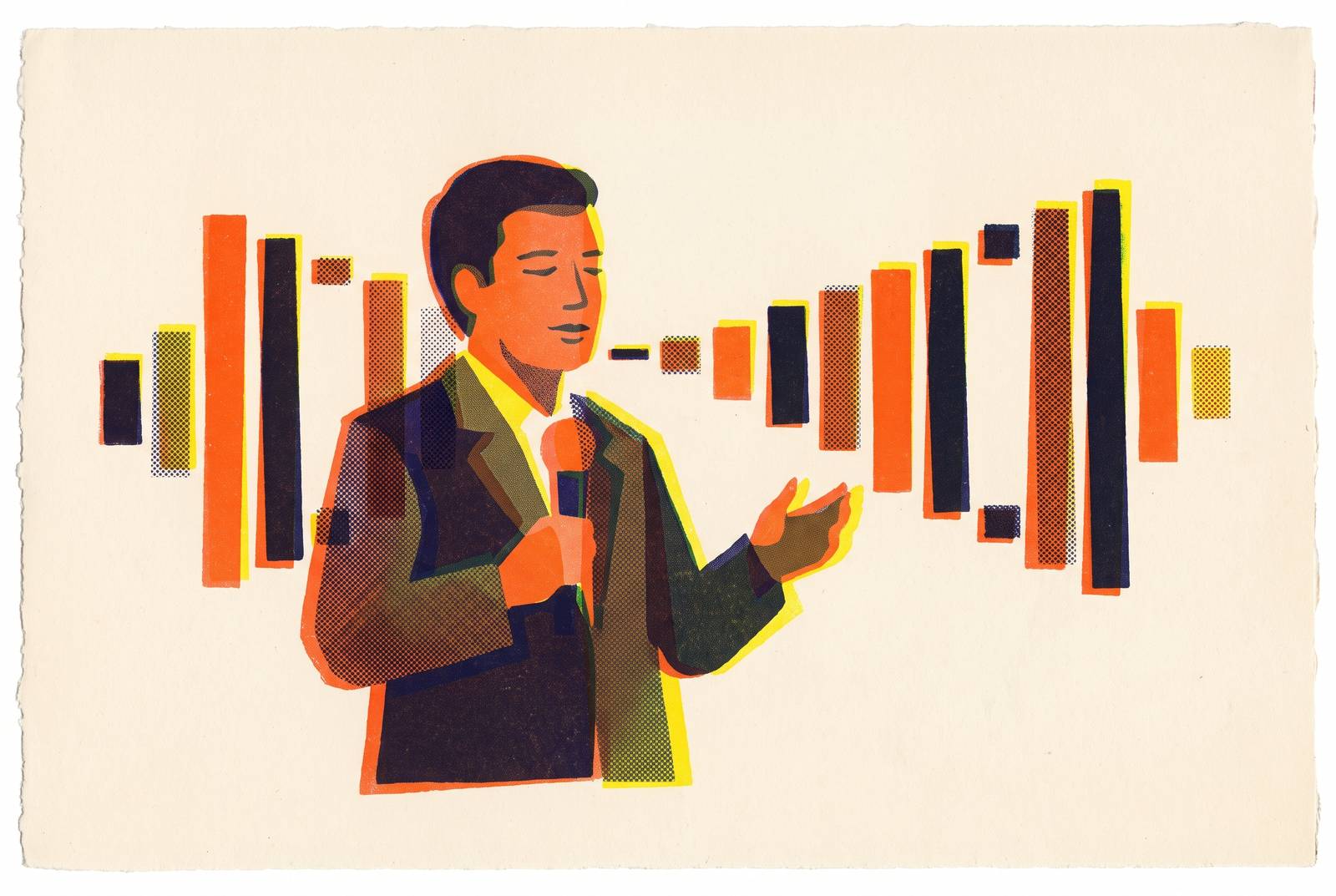
Silence is not dead air. Treating a pause that way makes every pause wasted airtime. But the brain does not clock out the moment a speaker stops talking; it changes gears. Research on the brain's default mode network shows that quiet stretches activate circuitry tied to reflection, empathy, and memory consolidation, so a pause performs cognitive work the talking part of a speech cannot do on its own. That is the piece's actual claim: pacing and strategic silence are trainable mechanics, not some charisma gene handed out at birth. Many people report feeling unconfident speaking in front of an audience, and that gap tracks who has drilled the skill, not who was born interesting.
The auditory cortex stays fully online during a pause. Listeners lean in and scan the quiet for meaning, the way someone checks a phone that has gone suspiciously silent mid-conversation. There is a mirror-neuron piece too: strip away the words and audiences start reading faces, posture, and vocal tone more closely, so when speech resumes it lands with more force than it would have otherwise. A pause is the setup for the next signal, not a gap in it. It is the setup for the next one, doing its job quietly while everyone assumes nothing is happening.
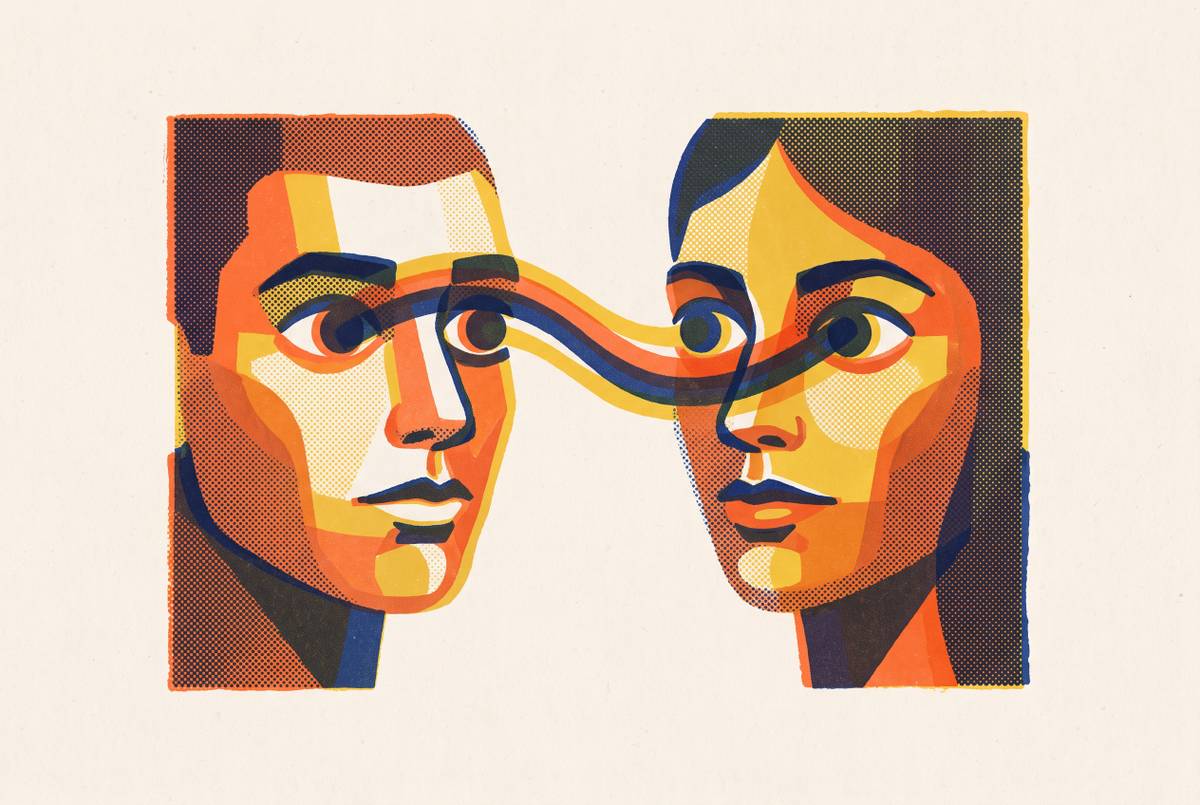
Neural coupling research at Princeton found that storytelling can sync the brain activity of speaker and listener almost in real time, and pacing works as the rhythm section holding that sync together. Cutting every rest out of a piece of music turns it into noise no matter how strong the melody beneath it is. A monotone speech fails for the identical reason.
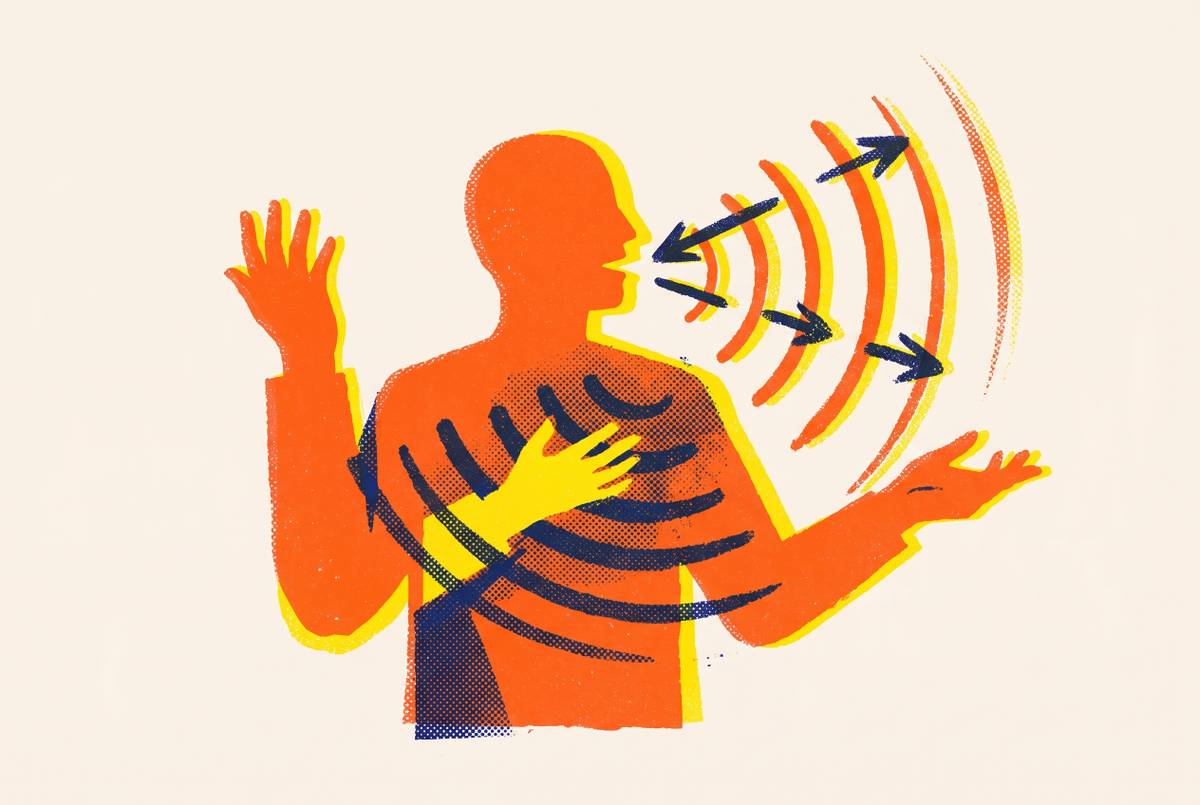
There is a physiological layer to this. Work on polyvagal theory shows that stress drives pitch up and speech faster, which means the real enemy of good pacing is not nervousness itself. It is a dysregulated nervous system running the show without asking the speaker's permission first. On the listening side, research from the Global Council for Behavioral Science found that how easily information gets processed shapes trust and action; pacing is one factor that can influence that ease. Speed and rhythm are the message's load-bearing walls, not decoration sitting on top of it. They are the message's load-bearing walls.
A practical taxonomy of silence, five types with distinct effects
Not every pause does the same job, and treating all silence as one tool is like calling every kitchen knife a "cutting thing" and wondering why the bread keeps coming out mangled. A two-second gap after a joke behaves nothing like a ten-second gap after someone says something painful.
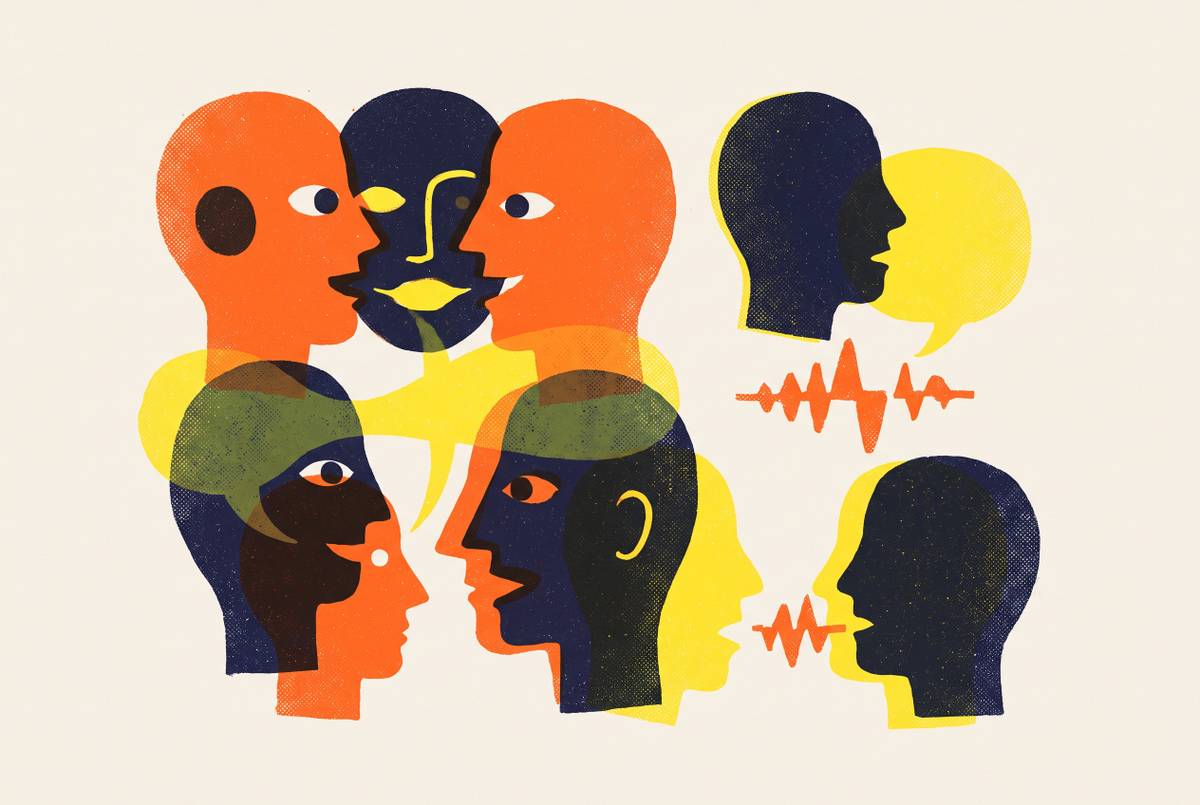
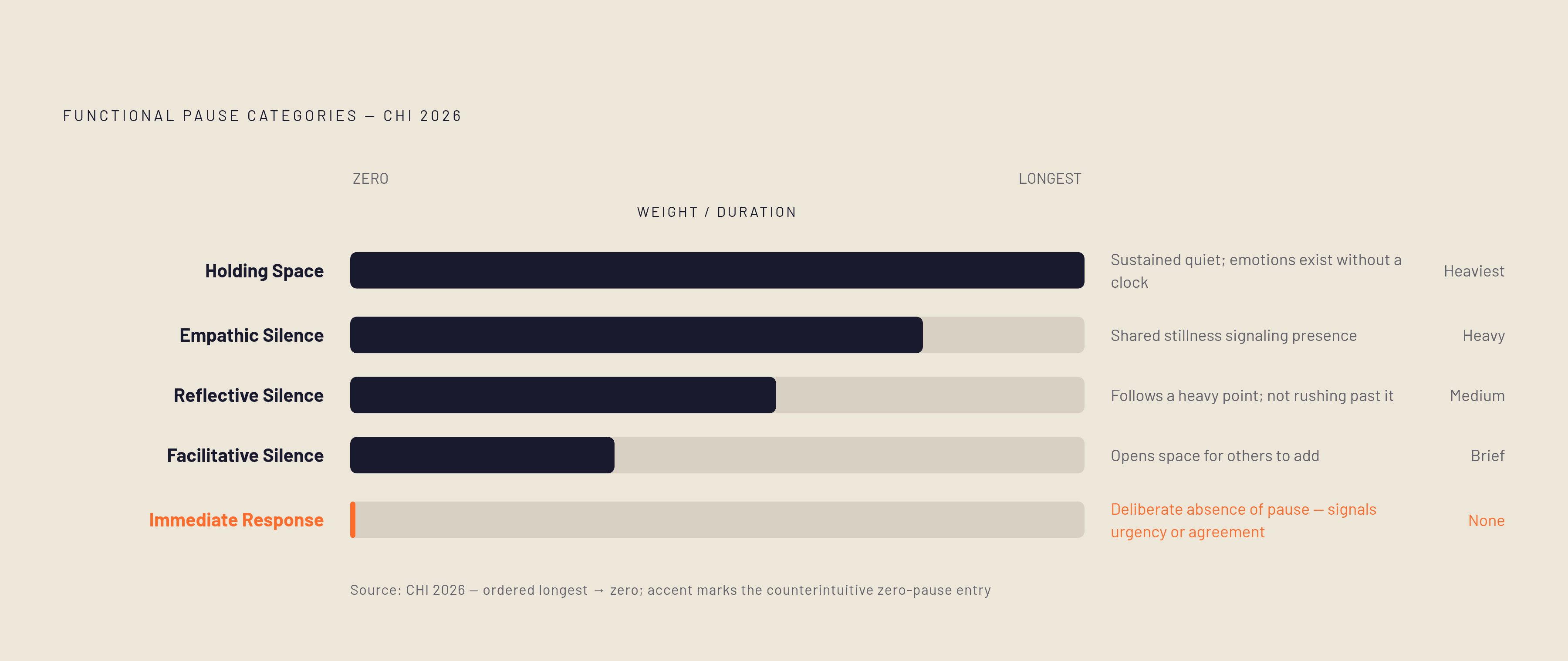
A 2026 study at the CHI Conference on Human Factors in Computing Systems, qualitative work across ten active-listening cases backed by a 50-person between-subjects study, sorted pauses into five working categories. Reflective Silence follows a heavy point and tells the room the speaker is not rushing past it. Facilitative Silence opens space for someone else to jump in, correct, or add detail. Empathic Silence is shared stillness that signals presence rather than a speaker quietly drafting a rebuttal in their head. Holding Space is the longer, sustained quiet that lets someone's emotions exist without a clock running on them. Immediate Response, somewhat counterintuitively, earns its own slot on the list: choosing not to pause at all, deployed on purpose to signal urgency or instant agreement.
The CHI researchers built a conversational agent that switched between these five types depending on context, and it beat a static-pacing control on every measure that mattered: perceived human-likeness, smoothness, interactivity, and how much people opened up. Pausing more was not what won. Pausing with a category in mind was, and that is the distinction most people miss when they treat silence as a single dial they can just turn up.
Samuel Zulu's 2025 Silence Intelligence Quotient framework pushes this into boardrooms specifically, breaking silence into Strategic Clarity (holding the frame), Ethical Command (restraint as integrity), and Influence (guiding without steering). A Holding Space pause dropped into a fast-moving negotiation reads as hesitation instead of composure. The category has to match the room. Picking the wrong one is its own failure mode, and arguably a more common one than staying silent too little.
Conditions that turn pauses into problems
Silence has a failure mode, and skipping over it does the whole subject a disservice. Stretch a pause too long, or drop it at the wrong beat, and it reads as avoidance, uncertainty, or a speaker who has checked out of the conversation.
There is a rough number attached to this. Research from Koudenburg and colleagues found that people start feeling uneasy after about four seconds of silence in conversation, and past that window, intention gets lost in translation. What the speaker meant as thoughtful restraint starts reading as dead air or, worse, as not having an answer ready.
Culture bends that number. In Japan, for instance, longer pauses often carry neutral or even positive weight, so the "right" length is not some universal constant stamped on a stopwatch. It shifts with the room and the culture sitting in it. The stakes sharpen further in public settings. Wharton's Michael Parke has studied strategic silence and found that timing and organizational context decide how withholding comment gets read. Going quiet at the wrong moment during public scrutiny does not project authority. It invites more scrutiny, which is the opposite of what the silence was supposed to buy.
None of this argues for less silence, and that distinction matters. It argues for calibration: knowing the five categories above, treating the four-second threshold as a rough cultural guideline rather than gospel, and treating pause length as a decision instead of a reflex. Naming the failure mode does not argue against practicing this deliberately. It is the reason the drills later in this piece carry as much weight as they do.
Pacing as the architecture of a spoken message
Pace is how fast or slow someone talks, and the skill sits in knowing when to speed up for energy versus slow down for weight (per Dr. Shereen Matar of SLT London, 2025). Speech behaves like music in this respect: a piece with no tempo changes, no rests, no dynamic range gets exhausting fast no matter how strong the melody underneath it is. A uniform pace does the same thing to a listener's attention.
Pace and pause are linked dials, not separate ones. They are linked, and the link is directional: pace and pause work together as linked signals rather than independent choices, which is a small mechanical detail that explains a lot of speeches that feel technically fine but land flat.
Harvard Business research on executive communication found that leaders who used certain verbal and rhetorical tactics saw their leadership ratings jump by roughly 60 percent. That is not a style point sitting on top of the substance. Those devices are pacing tools, building small rhythmic units inside a bigger speech the way a chorus breaks up verses in a song.
Story structure carries its own multiplier. Research has found that presentations built around a story tend to be recalled more effectively than ones leaning on stats alone, and the reason traces straight back to pacing: setup, tension, resolution is a rhythm baked into the structure itself, not a garnish bolted on afterward.
Simpler, clearer messages persuade more, because both faster delivery and heavy jargon raise the cognitive load a listener has to carry, and that load cuts against persuasion rather than helping it along. Here is where most advice gets it backwards: speakers reach for more words, more qualifiers, more technical language, assuming that sounds more credible, when the mechanism runs the opposite direction. Filler words, the "um," the "uh," the reflexive "like," are what pacing collapse actually sounds like out loud, a speaker who has lost the architecture and is throwing sound into the gap to avoid silence. Swapping those out for intentional pauses upgrades more than the vibe. It produces a number that can be counted, tracked, and driven down session over session. Vocal variety, control over speed, volume, and where the pauses land, is the audible signature of someone composed even if their stomach is doing something else entirely (per S5).
How high-stakes pressure destroys pacing
Stakes and pacing have an inverse relationship, and it is a cruel one: the more riding on a moment, the faster people talk and the more rigid they get, abandoning whatever pacing they rehearsed the night before (per Commanding Presence). Adrenaline does not distinguish between a bear and a boardroom, and Polyvagal research already established what stress does physiologically: pitch climbs, speech accelerates, and the pause is usually the first casualty of the two.
Under pressure, delivery also tends to get more performative and less conversational, which runs exactly backwards from what actually builds connection with a room (per Commanding Presence). The clock on all this is brutally short. Research suggests a large share of people form an impression of a speaker before a single word gets said, and speakers have only a brief window at the top of a talk to set the tone. Pacing in those 27 seconds is the frame the rest of the talk gets judged against. The rest of the talk gets judged against that frame, fair or not.
Workshop settings reveal a consistent mismatch between how silence feels from the inside and how it lands from the outside. A pause that feels like an eternity to the person standing up there, exposed and sweating a little, usually reads to the audience as calm and deliberate. That gap, between the internal experience of silence and its external effect, tends to be the single most surprising thing participants discover once they actually slow down on purpose (per Commanding Presence).
Negotiation offers maybe the cleanest example of silence as leverage. Skilled negotiators, a tactic associated with the Black Swan Group, deliver a statement and then simply stop, letting the discomfort of the gap do the work for them. People hate unfilled silence enough that they will talk to fill it, explain themselves, or concede ground nobody asked for. Michael Parke's Wharton research backs this from the employee side too: people who know when to hold their tongue and when to speak up get rated by managers as having more valuable input, not less presence in the room. Restraint reads as signal, not absence, and conflating the two is the single most expensive mistake in this entire piece.
Drills that build pacing and silence as deliberate habits
Treat these like reps at a gym, not like a personality makeover scheduled for one weekend. Nobody benches a heavy load on day one, and nobody develops pacing control by reading about it once and hoping it sticks by osmosis. An estimated 90 percent of pre-presentation anxiety comes down to a plain lack of practice, so the fix is almost embarrassingly direct: do more reps, on a schedule, with something to measure. A staged approach mixing real exposure, physiological regulation, and cognitive reframing tends to produce lasting change over roughly six to twelve weeks, and three sessions a week instead of one speeds that timeline up considerably, since more reps accumulate evidence faster that the skill has actually been learned.
The 2-second conversational pause: in an ordinary conversation, hold a full two seconds of silence after finishing a statement. Keep eye contact instead of glancing away to cover the discomfort, and watch what happens. Does the other person lean in, add detail, fill the space themselves? This is the baseline rep, building tolerance for silence before the stakes climb any higher.
The 5-second hold in emotionally weighted moments: after something that actually matters gets said, by either party, hold five full seconds before responding. Resist the urge to rescue the moment with a joke or a quick pivot away from it. This draws on the empathic and holding categories from the taxonomy above, applied deliberately rather than stumbled into.
The three-second listening signal: in a feedback conversation or coaching session, wait three seconds after the other person stops talking before responding. Research from bvop.org suggests that gap signals genuine cognitive engagement rather than a pre-loaded response waiting to fire, and it makes whatever comes next land with more weight. This drill trains the listener's pacing as much as the speaker's own.
The PREP framework gives a four-beat scaffold for impromptu, high-pressure moments: Point, Reason, Example, Point. The structure hands a speaker natural pause points between beats, so the pacing is not invented on the fly under stress. It is built into the shape of the answer before the answer even starts.
Record, review, measure: record a response to a single prompt, then play it back and count. Where did the pace speed up without meaning to? Where did a filler word sneak in where a pause should have gone instead? Filler count and pause frequency are concrete numbers, trackable week over week. Immersive tools like SpeakAR, described in a research paper, now let speakers rehearse in front of a virtual audience with real-time feedback, which offers a lower-stakes rung on the exposure ladder before the real room shows up.
A 2026 teaching unit published in Communication Teacher (Taylor & Francis) combined storytelling theory with actual performance practice across two class sessions as a structured approach to building pacing skill. The oral story format forces the issue on its own: a story has a natural arc, and that arc will not cooperate with someone barreling through it at one flat speed.
The competitive edge pacing gives in school, careers, and social life
Communication consistently ranks among the most in-demand professional skills, and NACE's 2025 Job Outlook survey found more than three-quarters of employers rank it as a critical trait in new hires. That is not a soft nice-to-have sitting beside the real qualifications. It sits at the top of the list, ahead of plenty of things people spend more time studying for.
Skipping this training carries a cost that appears in the numbers. Novoresume research found that public speaking anxiety has led 45 percent of people to turn down a promotion or skip applying for a role they wanted; this turns untrained pacing from an awkward personality quirk into an actual line item against someone's career. And here sits the opportunity buried inside the discouraging stat from the top of this piece: with only about a quarter of 16 to 24 year olds saying they feel confident speaking to a group, anyone who trains this early steps into a field where most of the competition has not bothered to show up.
Edwin Canizalez's 2025 analysis on Against Reduction's Substack argues that the most effective leaders redesign their charisma around strategic silence not to dominate a room, but to multiply what happens inside it, creating space for other people to think instead of hogging the airtime themselves. That is a different application of the same mechanics covered in every section above, aimed at team output and trust rather than personal spotlight.
None of this lives only in boardrooms and keynote stages, either. Pacing and silence shape a first date, a job interview, a dinner table story that either lands or dies halfway through. The Moxie Institute's research found that most people already tell stories instinctively in daily life, so the actual gap is not ability. It is awareness of a tool that has been sitting in their hands the entire time. Charismatic pacing was never about talking more or talking louder. It comes down to controlling time well enough that every word earns its place and every pause earns its silence, so the audience walks away remembering the message and the person who delivered it, in whichever order, and remembering both.
Sources
- Speak Less, Connect More: Why Silence Wins Conversations
- Strategic Silence and Psychological Safety: How Leaders Reclaim Charisma for Good
- Why Using Silence Makes Presentations More Powerful
- Hear You in Silence: Designing for Active Listening in Human Interaction with Conversational Agents Using Context-Aware Pacing | Proceedings of the 2026 CHI Conference on Human Factors in Computing Systems
- 10 Surprising Benefits of Pace and Pauses in Public Speaking